How we ranked them
1. Does the maker sell it on durability or on looks?
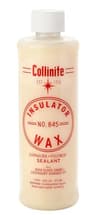
Almost nobody in this category publishes a durability figure in months — three of the four products below carry “Not published” in that row, and we print it rather than guessing. So the next best evidence is what the maker chooses to lead with. Collinite sells the 845 on longevity and hydrophobics; Adam’s publishes an actual figure for its graphene spray (18+ months, a claim rather than a warranty); Meguiar’s sells Gold Class paste on the warm carnauba look. That ordering is the ranking. If 845 is the bottle you are weighing and the unpublished figure bothers you, our Collinite 845 alternatives page sets it against the products that do publish one.
2. Can you apply it in the cold?
This is the criterion nobody writes about and everybody runs into. Paste wax goes hard in a cold tin and drags on a cold panel; liquids spread more easily at low temperatures; spray coatings want a dry surface, which is the hardest thing to achieve in a damp December. The practical answer for all four is the same: do the application work in the last mild week of autumn rather than in the middle of the season. Not one of these makers publishes a minimum application temperature, including Adam’s on its spray, so we are not going to invent one — the rule of thumb is a panel you can comfortably hold your palm against, out of direct sun, and dry.
3. Can you top it up when the car is filthy?
Whatever you apply in autumn will be thinner by January. The product that saves the season is not the strongest one, it is the one you will actually use again in the cold — which means a spray you mist onto a wet car during drying, not a wax that needs a dry panel and twenty minutes of buffing. Griot’s Ceramic 3-in-1 is on this page for exactly that job: it is applied as a drying aid, so topping up costs you nothing but the two minutes you were already spending with a towel.
The timing plan that actually works
Wax before the salt trucks run, not after. The layer has to be on the paint before the first brine application of the year, because a wax applied over salt residue seals the salt against the clear coat. That means doing the work in the last genuinely mild, dry weekend of autumn — decontaminate, dry, apply, then leave it alone.
Through the season, the schedule looks like this. Wash more often than you think you need to, including the wheel arches and the underbody, because frequency is what removes salt. Never wash a car in freezing temperatures where water will re-freeze in door shuts and locks. Use a snow foam pre-soak and a pressure washerso most of the grit comes off before anything touches the paint — winter grit is sharper and heavier than summer dust, and a contact wash through it is how cars pick up swirls in February. Then top up the protection with a spray during drying every few washes. Our winter washing guide is the full method.
Where the salt actually does the damage
Chloride-based de-icers hold moisture against metal and accelerate corrosion, and the parts of a car they reach are mostly not painted panels. That is why the single highest-value winter wash habit is rinsing the underside and inside the wheel arches, where salt collects out of sight and stays wet for days. A wax job on the hood does nothing for a rocker panel.
So treat these four products as the part of winter defence they really are: they keep brine from bonding to clear coat, they make the car release dirt with less contact, and they buy you a car that comes out of March looking like it went into November. For the rest of the job, wash more often and get a hose under it.
What about a full ceramic coating instead?
It is a reasonable winter decision and it is a different project. A bonded coating lasts years rather than months, which solves the top-up problem outright — but it has to be applied to a decontaminated, polished, bone-dry car, and every maker we carry requires that. Doing that work in a cold damp garage in November is how people end up with a coating they have to polish off again. If you want the long-term answer, plan it for spring and read our ceramic coating ranking; if you want the car protected by next weekend, buy the Collinite.