What actually differs between paste and liquid
Four things change with the form, and none of them is protection. Hold that thought, because nearly every argument about paste versus liquid is really an argument about two specific products that happen to come in different packaging.
1. How fast you can cover a car
A liquid pours onto an applicator and smears across a panel in one motion. A paste has to be loaded off the surface of the tin, which means a trip back to the tin for roughly every quarter panel. On a sedan that is a handful of extra minutes; on a crew-cab pickup with a long bed and a tall roof it is the difference between one session and two. This is the biggest practical gap between the forms, and it is why liquids take over once a vehicle gets large.
2. How evenly the coat goes down — and how thick
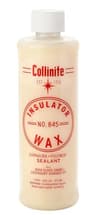
This cuts the other way. A paste meters itself: you can only pick up as much as sticks to the pad, which makes a consistently thin coat easier to achieve. A liquid will happily pour out twice what the panel needs, and with some products a heavy coat is genuinely punishing to remove. Collinite 845 is the textbook case — it is a thin-coat product, and applying it the generous way turns buffing into a workout. If you have ever fought a wax off a panel, over-application was almost certainly the reason.
3. Mess, trim and the shape of the container
A tin sits open on a flat surface and does not spill. A bottle tips over. Pulling the other way: liquid that runs into a panel gap wipes straight out, where paste residue in a textured plastic trim seam needs a brush. Neither form is clean; they are messy in different places. Being kind to trim is a formulation property rather than a form one — Chemical Guys makes that claim for Butter Wet Wax, and the listings for the other three publish nothing either way.
4. Cost per application, which is not cost per ounce
Pastes come in small containers and get used thinly, so the headline size misleads. The Turtle Wax graphene paste is a 5.5 oz tub next to an 11 oz Meguiar’s tin and a 16 oz Collinite bottle, but a paste coat is thinner than a poured liquid coat. Judge by how many whole-car applications you realistically get, not by the number on the front of the package.
The comparison, from the published specifications
| Product | Form | Size | Chemistry | Published durability |
|---|
| Collinite No. 845 Insulator Wax | Liquid | 16 oz | Carnauba + polymer sealant | Not published |
| Chemical Guys Butter Wet Wax | Liquid | 16 oz | Carnauba liquid wax | Not published |
| Meguiar’s Gold Class Carnauba Plus | Paste | 11 oz | Carnauba paste | Not published |
| Turtle Wax Ceramic Graphene Paste | Paste | 5.5 oz | Graphene / ceramic paste | Not published |
That last column is the point of the table. Not one of the four makers publishes a durability figure, so anybody telling you paste lasts longer than liquid — or the reverse — is reporting an impression, not a specification. What the listings do support is a chemistry ranking, and chemistry is what durability follows: a polymer sealant such as Collinite 845, or a graphene/ceramic paste, is sold on longevity and water behavior, where a plain carnauba is sold on the look. Our wax vs sealant vs ceramic coating page is the full version of that hierarchy.
Which should you buy?
Buy liquid if your vehicle is a mid-size car or bigger, you want the job finished in one go, or durability through a winter is the reason you are waxing at all. Collinite 845 is the pick, with the honest caveat that it demands thin coats and does not give the warm carnauba glow — it gives a functional, hydrophobic finish instead. If your priority is a stress-free first attempt on a whole car, Butter Wet Wax is the gentler route and flatters most colors, with carnauba-grade durability as the trade.
Buy paste if you enjoy the process, your car is small, or you specifically want the depth carnauba gives dark paint. The Meguiar’s tin is the cheap, forgiving classic — it does not punish you for working a panel twice. The Turtle Wax graphene paste is the one to choose if you like paste application but want water behavior closer to a sealant; just judge it on beading rather than on the word “graphene,” which is doing a great deal of marketing work across this whole category.
Whichever form you pick, the surface under it decides the result. Wax has no ability to hide bonded contamination or swirls — it magnifies both. If the paint feels rough, the plastic-bag test tells you whether to clay first, and removing swirl marks comes before protection, never after. The full detailing order puts wax where it belongs: last.
How this page differs from our other wax pages