CFM and FPM: the two numbers, and why the cap decides which you get
Every blower spec sheet has two figures and they do different jobs. CFM is the volume of air moved per minute — that is what pushes a sheet of water off a flat panel. FPM is how fast that air travels — that is what blasts a droplet out of a tight recess. Makers trade one against the other, and almost nobody is good at both without a large motor and a big price.
Under $200, the published CFM figures are 100 (MetroVac) and 90 (Maxshine), which is nowhere near enough to dry a car quickly. The published FPM figures are 18,000 and 22,000, which is plenty to clear trim. So buy accordingly: these are finishing tools used alongside a drying towel, not instead of one. A page that told you a $120 handheld replaces your towel would be selling you something.
How we ranked them
1. Does the maker publish an airflow figure at all?
This is the first filter and it immediately separates two of the three from the third. MetroVac and Maxshine both publish CFM, FPM, motor rating and power draw. SHELANDY publishes none of them — we could not find airflow, air speed, horsepower, wattage, filtration, weight or a warranty term on any manufacturer page we could reach, so every one of those rows in its table reads “Not published”. That is a genuine trade rather than a nitpick, and it is why the cheapest machine here is ranked third rather than first.
2. Is the air filtered?
An unfiltered blower is a device for picking up driveway dust and firing it at a wet, freshly washed panel. Maxshine publishes a built-in air filter, which is the genuine differentiator inside this cap and the reason it is second rather than third. MetroVac publishes nothing about filtration on the Sidekick, and neither does SHELANDY. If your car lives on a dusty driveway rather than in a garage, move the Maxshine to the top of your own list.
3. Handheld or hosed?
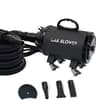
This is a format decision more than a performance one. A three-pound handheld on a long cord is quick to grab, lives on a shelf and is the right thing for a ten-minute trim blow-through. A wheeled canister on a 14-foot hose means the machine sits still while you walk around the car, which is less tiring on a big vehicle and much better if you are drying more than one. The SHELANDY is the only canister format under this cap, and that format — not its unpublished specs — is what you are buying it for.
4. Will the plug cope?
Worth checking before you spend anything, because it is the one thing that can make a dryer unusable in your garage. The two handhelds here draw modest power — MetroVac publishes 960 watts and 8 amps for the Sidekick, Maxshine 1,200 watts — so both run on an ordinary household circuit. That is not true further up the range: MetroVac publishes 2,160 watts and 18 amps for the Master Blaster, and Adam’s states its Air Cannon requires a 20-amp circuit. Under $200 the electrical question goes away, which is a real and underrated advantage of this cap.
Why a blower is worth $100 at all
Because drying is where swirl marks come from. Every pass of a towel over a panel is contact, and contact over a speck of grit is a scratch. The towel is the necessary compromise on flat surfaces; the water trapped in gaps and badges is the part that makes people go back over an already-dry panel with a damp towel, which is the single worst habit in a home wash. Air solves that part without touching anything, which is why our drying guide calls a blower the safest drying tool available and puts it in the method.
It is also the best upgrade available for a dark car, where every one of those towel passes shows. Our black car shopping listmakes the same argument from the paint’s side.
When to spend past $200 instead
Three cases. If you want to dry a whole car touch-free in one walk around it, you need published volume in the hundreds of CFM and that does not exist under this cap — our full dryer rankinghas those machines. If you dry several vehicles a week, buy the warranty: MetroVac’s Master Blaster is the only dryer we carry with a five-year limited warranty on the motor. And if you want heated air, nothing under $200 publishes a heating element — Maxshine’s own spec sheet lists a temperature rise off the motor, which is not the same thing, and we are not going to pretend otherwise.