Swirl & Shine

Best Car Dryer Blowers for Touchless Drying

The only way to dry a car without anything touching the paint. Five blowers ranked on the two numbers that decide the job - airflow volume and air speed - with honest cons on every pick and the circuit check to do before you buy.

By Stephen V.Last updated How we rank

Drying is the single most dangerous step in a home wash. By the time you pick up a towel the paint is clean, which means every bit of grit the wash missed is now sitting loose on the surface with a weighted cloth about to drag across it. A good drying towel manages that risk well. A blower removes it entirely, because nothing touches the car at all.

The picks below are ranked on three things: airflow volume (CFM — how fast it sheets water off a panel), air speed (FPM — how well it clears a mirror housing or a lug-nut recess), and whether the maker publishes those numbers at all. We have not tested these units. Every figure quoted is the manufacturer’s own, read on their product page on the date cited at the bottom of this page, and where a maker publishes nothing the spec table says so rather than borrowing a number from a reseller.

How this is funded: we earn a commission if you buy through our links, at no extra cost to you. It never changes which product we recommend, and we’ll always tell you who should skip one. Full disclosure.

Quick picks

Ranked on published specs, paint safety and buyer fit. Select a row to jump to the full write-up. We have not tested these products — here is exactly what we do instead.

#ProductBest forPrice
1
Adam's Polishes Air Cannon Car Dryer

Adam's Polishes Air Cannon Car Dryer

The best balance of the two things that matter in a car dryer: Adam's publishes 392 CFM for volume and over 73,200 FPM for speed, which is enough air to sheet a wet hood and enough velocity to clear a mirror housing. It filters the air, it heats it in under 30 seconds, and the self-expanding 30-foot hose means you walk around the car instead of carrying the machine.

Best overall
$284.74 · View on Amazon

Price as of October 5, 2026. #ad How we’re funded

2
MetroVac Air Force Blaster Sidekick SK-1-25

MetroVac Air Force Blaster Sidekick SK-1-25

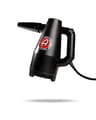
Three pounds of all-steel blower on a 25-foot cord, and the most sensible first purchase in the category. MetroVac publishes 100 CFM at 18,000 FPM from a 1.3 peak-HP motor — nowhere near enough to dry a whole car quickly, but right for the job most people actually want done: blasting trapped water out of mirrors, badges, grilles, lug nuts and door shuts before it runs out and streaks.

Best first blower
$134.99 · View on Amazon

Price as of October 5, 2026. #ad How we’re funded

3
MetroVac Air Force Master Blaster MB-3CD

MetroVac Air Force Master Blaster MB-3CD

The one detail shops keep buying, and the only pick here with a five-year warranty on the motor. Two 4.0 peak-HP fan motors draw 18 amps and 2,160 watts to push 227 CFM at a published 58,500 FPM — less volume than the Adam's but a harder, faster stream, which is what clears standing water out of panel gaps and grille slats on a truck.

Best for trucks and daily use
$537.99 · View on Amazon

Price as of October 5, 2026. #ad How we’re funded

4
Adam's Polishes Handheld Mini Air Cannon

Adam's Polishes Handheld Mini Air Cannon

The handheld that keeps the two features the full-size Air Cannon is bought for — heated air and filtered air — in a 3 lb 2 oz body on a 20-foot cord. Adam's publishes 90 CFM at 19,000 FPM from a 1,200-watt motor. Filtered air is the genuine differentiator here: it is what stops a blower redistributing driveway dust onto a freshly washed panel.

Best handheld with filtered air
$104.99 · View on Amazon

Price as of October 5, 2026. #ad How we’re funded

5
SHELANDY Car & Motorcycle Dryer with 14 ft Hose

SHELANDY Car & Motorcycle Dryer with 14 ft Hose

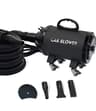
The cheapest way to get a hosed, wheeled canister rather than a handheld. It buys you the right format — a 14-foot flexible hose and casters, so the machine stays put while you walk the car. What it does not buy you is a single airflow figure we could verify on a manufacturer page, and that is a real trade rather than a nitpick.

Best budget canister
$95.00 · View on Amazon

Price as of October 5, 2026. #ad How we’re funded

The picks in full

#1Best overall

Adam's Polishes Air Cannon Car Dryer

The best balance of the two things that matter in a car dryer: Adam's publishes 392 CFM for volume and over 73,200 FPM for speed, which is enough air to sheet a wet hood and enough velocity to clear a mirror housing. It filters the air, it heats it in under 30 seconds, and the self-expanding 30-foot hose means you walk around the car instead of carrying the machine.

Strengths

  • 392 CFM and over 73,200 FPM published by the maker — volume for panels and velocity for trim gaps, which most blowers trade off against each other
  • Filtered air plus a self-expanding 30-foot hose and a 15-foot cord, so you can circle a full-size vehicle from one outlet
  • Adam's states it delivers heated air in under 30 seconds and calls it "the safest touch-free drying method available"

Trade-offs

  • Adam's requires a 20-amp circuit for the dual 800W motor — an older garage or an outdoor outlet on a 15-amp breaker may trip
  • 84 dB by the maker's own figure, which is loud enough that early-morning driveway use will annoy neighbors
  • It is a wheeled canister, not a handheld — there is a machine, a hose and a cord to store, and Adam's does not publish a weight

Who should skip it. Skip it if you only want to chase water out of mirrors, badges and wheels after towel-drying the panels. That job is done by a 3-pound handheld for a fraction of the money, and the Air Cannon's real advantage — moving enough air to dry whole panels — is wasted on it.

Airflow392 CFM (per maker)
Air speedOver 73,200 FPM / over 200 MPH (per maker)
Motor3.2 HP, dual 800W, adjustable speed (per maker)
Heated airHeated in under 30 seconds (per maker)
FiltrationRemovable, cleanable filter cover (per maker)
Hose / cordSelf-expanding 30 ft hose; 15 ft power cord
NozzlesRubberized fan tip and pointed tip
Noise84 dB (per maker)
ElectricalRequires a 20-amp circuit (per maker)
Warranty1 year against manufacturer defects
WeightNot published

Specs read from the product listing, on October 4, 2026. “Not published” means the maker doesn’t state that figure.

#2Best first blower

MetroVac Air Force Blaster Sidekick SK-1-25

Three pounds of all-steel blower on a 25-foot cord, and the most sensible first purchase in the category. MetroVac publishes 100 CFM at 18,000 FPM from a 1.3 peak-HP motor — nowhere near enough to dry a whole car quickly, but right for the job most people actually want done: blasting trapped water out of mirrors, badges, grilles, lug nuts and door shuts before it runs out and streaks.

Strengths

  • 3 pounds and 4.5 x 7.5 x 9.75 inches — you hold it one-handed and it lives on a shelf, not on the floor
  • 960 W / 8 A runs happily on any household circuit, unlike the two big canister units here
  • All-steel construction, made in the USA, with a one-year limited warranty on the unit, motor, parts, switches and cords

Trade-offs

  • 100 CFM is roughly a quarter of the Adam's 392 CFM — it will not sheet water off a hood in one pass, and drying a whole car with it is slow
  • No hose: the nozzle is on the machine, so you are reaching into wheel wells with the whole unit in your hand
  • MetroVac publishes no noise rating and no filtration for the Sidekick, and no heated-air figure

Who should skip it. Skip it if touch-free drying of the whole car is the point. If you bought a dryer specifically so that nothing touches your clear coat, 100 CFM will frustrate you by the second panel — buy volume instead.

Airflow100 CFM (per maker)
Air speed18,000 FPM (per maker)
Motor1.3 peak HP single fan, 120V (per maker)
Power draw960 W / 8 A (per maker)
Cord25 ft on this version (14 in and 12 ft also sold)
NozzlesAir flare and blower nozzle
Weight3 lbs
Size4.5 x 7.5 x 9.75 in
Warranty1-year limited on unit, motor, parts, switches and cords
Heated airNot published
FiltrationNot published

Specs read from the product listing, on October 4, 2026. “Not published” means the maker doesn’t state that figure.

#3Best for trucks and daily use

MetroVac Air Force Master Blaster MB-3CD

The one detail shops keep buying, and the only pick here with a five-year warranty on the motor. Two 4.0 peak-HP fan motors draw 18 amps and 2,160 watts to push 227 CFM at a published 58,500 FPM — less volume than the Adam's but a harder, faster stream, which is what clears standing water out of panel gaps and grille slats on a truck.

Strengths

  • Five-year limited warranty on the unit and the motor, which nothing else here comes close to
  • 58,500 FPM through all-steel construction and a 10-foot commercial hose — built for daily commercial use, not weekend use
  • Ships with five attachments including a crevice tool, an air flare and an inflator adapter, so it is a shop blower as well as a dryer

Trade-offs

  • 18 amps and 2,160 watts sits above the continuous limit of a 15-amp household circuit — check your garage breaker before you buy
  • 17 pounds with a 12-foot cord and a 10-foot hose: you reposition the machine around the car rather than just the hose
  • MetroVac publishes no filtration and no heat figure for the MB-3CD, so it is not directly comparable to the filtered, heated Adam's unit

Who should skip it. Skip it if you wash one car every couple of weeks in a suburban driveway. The warranty, the steel case and the 18-amp draw are all built for a shop running it daily, and you will pay well above the Adam's for durability you will never use up.

Airflow227 CFM (per maker)
Air speed58,500 FPM (per maker)
MotorTwo 4.0 peak HP twin fan motors, 120V (per maker)
Power draw2,160 W / 18 A (per maker)
Hose / cord10 ft commercial hose; 12 ft grounded 3-conductor cord
NozzlesCrevice tool, 1.5 in neoprene blower nozzle, air flare, inflator adapter, hose adapter
Weight17 lbs
Warranty5-year limited on unit and motor; 1-year on parts, switches and cords
Heated airNot published
FiltrationNot published

Specs read from the product listing, on October 4, 2026. “Not published” means the maker doesn’t state that figure.

#4Best handheld with filtered air

Adam's Polishes Handheld Mini Air Cannon

The handheld that keeps the two features the full-size Air Cannon is bought for — heated air and filtered air — in a 3 lb 2 oz body on a 20-foot cord. Adam's publishes 90 CFM at 19,000 FPM from a 1,200-watt motor. Filtered air is the genuine differentiator here: it is what stops a blower redistributing driveway dust onto a freshly washed panel.

Strengths

  • Heated and filtered air in a 3 lb 2 oz handheld — the only pick under five pounds here that publishes both
  • 19,000 FPM is the higher published air speed of the two handhelds, and a 20-foot cord reaches most of a car
  • Flat tip and round tip included, so it switches between panel sheeting and crevice blasting

Trade-offs

  • 1,200 watts at 10 amps gets warm in long sessions, and Adam's publishes no duty-cycle guidance
  • 90 CFM means drying a full-size SUV with it alone is a long job — this is a finisher, not a substitute for volume
  • Adam's publishes no warranty term and no noise rating for the Mini, unlike the full-size Air Cannon

Who should skip it. Skip it if you only want to clear wheels, mirrors and badges. Heated, filtered air is most of what you are paying for, and on lug nuts you will not notice it — the Sidekick does that job for less with a longer cord.

Airflow90 CFM (per maker)
Air speed19,000 FPM (per maker)
Motor120V, 10 A, 1,200 W (per maker)
Heated airHeated, filtered air (per maker)
Cord20 ft power cord
NozzlesFlat tip and round tip
Weight3 lb 2 oz
NoiseNot published
WarrantyNot published

Specs read from the product listing, on October 4, 2026. “Not published” means the maker doesn’t state that figure.

#5Best budget canister

SHELANDY Car & Motorcycle Dryer with 14 ft Hose

The cheapest way to get a hosed, wheeled canister rather than a handheld. It buys you the right format — a 14-foot flexible hose and casters, so the machine stays put while you walk the car. What it does not buy you is a single airflow figure we could verify on a manufacturer page, and that is a real trade rather than a nitpick.

Strengths

  • A 14-foot flexible hose and wheels for a fraction of the price of the hosed canister units above
  • The hose-and-casters format is the one that actually gets used — you move a nozzle, not a machine
  • Cheap enough to find out whether touch-free drying suits you before committing to a MetroVac or an Adam's

Trade-offs

  • SHELANDY publishes no CFM, no air speed, no horsepower and no wattage we could verify on a manufacturer page — every performance row below reads "Not published" for that reason
  • No published filtration, so there is nothing stated to stop it pushing driveway dust at a wet panel
  • No published warranty term, against five years on the MetroVac and one year on the Adam's

Who should skip it. Skip it if you want to know what you are buying. Everything else here states its airflow, its motor and its warranty; this states none of them, and a dryer that will not publish a CFM figure is telling you something — the same way a pressure washer that will not publish a GPM is.

Hose14 ft flexible hose (per listing)
MobilityWheeled base (per listing)
AirflowNot published
Air speedNot published
MotorNot published
Power drawNot published
Heated airNot published
FiltrationNot published
WeightNot published
WarrantyNot published

Specs read from the product listing, on October 4, 2026. “Not published” means the maker doesn’t state that figure.

How to choose a car dryer blower

Almost every buying mistake in this category comes from treating “powerful” as one number. It is two, they pull in opposite directions, and which one you need depends entirely on what you want the blower to do. Four questions sort it out before you spend anything.

1. Volume or speed? They are not the same thing

CFM is cubic feet of air per minute — how much air the machine moves. High CFM is what pushes a whole sheet of water off a hood in one sweep. FPM (feet per minute, sometimes converted to MPH) is how fast that air is travelling. High FPM is what punches water out of a wing mirror, a badge recess, a grille slat or behind a set of lug nuts.

The difference is bigger than the spec sheets make it look. Adam’s publishes 392 CFM for the full-size Air Cannon and 90 CFM for its handheld Mini — a four-fold gap in volume — while the Mini actually publishes slightly more air speed than the MetroVac Sidekick. A handheld can be excellent at crevices and still take twenty minutes to dry a sedan. A big canister can sheet a roof in seconds and still be awkward to aim into a wheel well.

What you want to doWhat decides itPick
Dry the whole car touch-free — nothing goes near the clear coatAirflow volume (CFM), plus a hose so you can walkAdam’s Air Cannon
Towel the panels, then chase water out of mirrors, badges and wheelsAir speed and one-handed weightMetroVac Sidekick
Dry a truck, a van or several cars a week without burning out a motorDuty rating and warranty, not peak numbersMetroVac Master Blaster
Keep warm, filtered air but stay handheld and store it on a shelfPublished filtration plus heat in a light bodyAdam’s Mini Air Cannon
Stop water running out of mirrors and streaking a dried panelAny of them — this is the one job every blower here does wellThe cheapest one you will actually pick up

2. Check your circuit before you check the price

This is the buying mistake nobody warns about. Adam’s states plainly that the Air Cannon “Requires 20 AMP Circuit” for its dual 800W motor. MetroVac publishes 18 amps and 2,160 watts for the Master Blaster. A standard North American garage or outdoor receptacle is frequently on a 15-amp breaker, and a 15-amp circuit is only rated for 12 amps of continuous load. Run either machine on one and you will either trip the breaker or, worse, sit just under the limit on an extension cord that gets hot.

The two handhelds dodge this entirely — the Sidekick draws 8 amps and 960 watts, Adam’s Mini draws 10 amps and 1,200 watts, and both run on anything. If you rent, if your washing spot is an apartment parking space, or if you have no idea what breaker your outside outlet is on, that is a real argument for a handheld that has nothing to do with drying performance.

3. Filtered air, or you are sandblasting your own paint

A blower is a fan pointed at wet paint. Whatever is in the air near the machine — driveway dust, pollen, grit off a garage floor — goes with it. This is the quiet reason a cheap blower can leave a car looking worse than a towel did.

Of the five picks here, only the two Adam’s units publish filtration. MetroVac publishes none for either of its machines, and SHELANDY publishes none either. That does not make the MetroVacs bad — they are drawing air through a sealed steel body rather than a floor-level intake — but it does mean the honest advice is the same for all three: do not set the machine down on a dusty concrete floor and then point it at a clean wet car. Put it on a stool, a step or the tailgate.

4. Heat is a convenience, not a requirement

Adam’s advertises heated air on both its units — the full-size one “delivers heated air in less than 30-seconds”. Warm air evaporates the last film faster and is genuinely nicer to use in February. But most of the heat in any of these machines is waste heat off the motor, MetroVac publishes no figure for it at all, and no blower here is hot enough to be a substitute for moving enough air. Treat heat as a tiebreaker between two machines you already like, not a reason to pay more.

Does a blower actually replace a drying towel?

For most people, not completely — and anyone telling you otherwise is selling something. Here is the honest version.

A blower on its own works best on protected paint. On a car with a fresh wax, sealant or ceramic spray, water pulls into tight beads with very little contact area and a strong blast of air simply removes them. On bare, unprotected clear coat water lies flat in sheets, clings, and a blower will push most of it off and leave a film that then dries into water spots. Protection is what makes touchless drying actually touchless.

The hybrid is what most owners settle into. Blow the glass, mirrors, grille, badges, trim gaps and wheels first — the places a towel cannot reach and that drip onto dried panels ten minutes later — then take a plush towel to the flat panels. You get most of the swirl reduction, you cut the towel passes roughly in half, and you stop the single most annoying thing about drying a car: the dribble that runs out of a mirror housing right after you have finished the door.

Where a blower is unambiguously better than any towel: wheels and lug nuts, side-mirror housings, grilles and badge recesses, door and trunk shuts, fuel-filler flaps, roof rails and roof-rack feet, convertible top seams, and anywhere on a motorcycle. There is no towel technique that gets water out of a lug-nut pocket. For the rest of the method the blower slots into, see how to dry a car without scratching it.

What a blower will not fix

A dryer removes the drying step from the swirl equation. It does nothing about the other three places swirls come from, and buying one instead of fixing those is money badly spent.

  • A dirty wash mitt. Most marring happens during contact washing, not drying. A grit guard and a clean mitt do more for your finish than any blower.
  • Skipping the pre-rinse. Air cannot remove grit you ground in twenty minutes earlier. The safe-wash method still applies.
  • Hard water. A blower that gets 95% of the water off still leaves 5% to evaporate, and if your tap water is mineral-heavy that 5% spots. Blow down the panel so water runs off an edge, and work fast in direct sun.
  • Bonded contamination. If the paint feels gritty after washing, that is embedded fallout, and it needs clay, not air.

What about a leaf blower?

People do it, and it mostly works. A cordless leaf blower moves plenty of air and costs nothing extra if you already own one. The honest caveats: a leaf blower’s intake has spent its life next to grass clippings and dust and has no filtration, the nozzle is shaped to scatter air across a lawn rather than concentrate it into a trim gap, and a gas unit will put exhaust and a fine oil mist across a clean panel. Blow out the housing first, keep it off the ground, and never use a gas one.

Where a purpose-built dryer earns its money is the hose and the nozzles. The Adam’s 30-foot self-expanding hose and the MetroVac’s 10-foot commercial hose let you move a light nozzle around the car while the machine stays still. That is the difference between a tool you use every wash and one you use twice.

Which one should you buy?

For most people washing one or two cars at home, the Adam’s Air Cannon. It is the only pick here that posts both high volume (392 CFM) and high speed (over 73,200 FPM), it filters and heats the air, and the self-expanding 30-foot hose is what makes genuine touch-free drying of a whole car practical rather than theoretical. Check you have a 20-amp circuit first — that is a real condition, not a footnote.

If this is your first blower and you are not sure you will use it, buy the MetroVac Sidekick instead. Three pounds, 8 amps, a 25-foot cord and a steel body with a one-year warranty, and it does the job everyone ends up valuing most — getting water out of mirrors, wheels and shuts — for a fraction of the money. If it turns out you want to dry the whole car with air, you will have learned that cheaply.

If you dry a truck, a van or several vehicles a week, the MetroVac Master Blaster is the one with a five-year motor warranty and the build to earn it, provided your circuit can take 18 amps. If you want warm filtered air without a canister on the floor, the Adam’s Mini Air Cannon is the only handheld here that publishes both. And if the budget is the binding constraint, the SHELANDY gets you the right format — hose and wheels — cheaply, on the clear understanding that its maker publishes no airflow figure at all.

Frequently asked questions

Is a car dryer blower better than a drying towel?

For avoiding swirl marks, yes, because nothing touches the paint. For speed on flat panels, a big plush towel is usually quicker. Most owners end up doing both: blow the glass, mirrors, grilles, badges, shuts and wheels where water hides and later drips onto dried paint, then towel the flat panels. A blower on its own works best on waxed, sealed or ceramic-coated paint, where water beads tightly and blows off cleanly.

How much CFM do I need to dry a car?

There is no published industry minimum, so judge it by job. The handhelds here publish 90 to 100 CFM, which is plenty for mirrors, wheels, grilles and panel gaps but slow across whole panels. The full-size units publish 227 and 392 CFM, which is the range where sheeting water off a hood in one pass becomes realistic. If touch-free drying of the entire car is your goal, buy volume; if you are finishing after a towel, speed and weight matter more than CFM.

Can I use a leaf blower to dry my car?

Yes, with caveats. A leaf blower moves plenty of air, but it has no filtration, its intake has lived around dust and clippings, and its nozzle spreads air rather than concentrating it into a trim gap. Blow the housing out before you start, keep it off the ground so it is not inhaling driveway grit, and never use a gas blower near clean paint - the exhaust and oil mist land on the car. A purpose-built dryer mainly buys you a hose, shaped nozzles and, on some units, filtered air.

Do car dryers leave water spots?

They can, for the same reason a towel can: any water left behind evaporates and leaves whatever minerals were in it. A blower that removes 95% of the water still leaves 5% to dry on its own. Work in the shade, blow downward so water runs off a panel edge rather than being pushed into a trim gap, and keep protection on the paint so water beads instead of sheeting. On hard water, finish with a damp microfiber rather than letting the last film air-dry.

Will a car dryer blower work on a car with no wax or coating?

It works, but less well. On bare clear coat water lies flat in sheets with a lot of contact area, so air pushes it around rather than lifting it off, and you will be left with a film. On a car with a fresh wax, sealant or ceramic spray the same water pulls into tight beads that blow away easily. If you bought a blower specifically to stop touching the paint, a protective layer is what makes that realistic.

Does a car dryer need a dedicated circuit?

The big ones effectively do. Adam's states that the Air Cannon requires a 20-amp circuit, and MetroVac publishes 18 amps and 2,160 watts for the Master Blaster - both above the 12-amp continuous rating of a standard 15-amp household circuit. The handhelds here draw 8 amps (MetroVac Sidekick) and 10 amps (Adam's Mini) and run on anything. Check the breaker feeding your outdoor outlet before buying a full-size unit.

Is a heated car dryer worth paying more for?

It is a convenience, not a requirement. Warm air speeds up evaporation of the last film and is genuinely nicer in cold weather, and Adam's publishes heated air on both of its units here. But much of the heat in any of these machines is waste heat from the motor, MetroVac publishes no heat figure at all, and no amount of warmth substitutes for moving enough air. Treat it as a tiebreaker between two machines you already like.

Are car dryer blowers loud?

Yes. Adam's publishes 84 dB for the Air Cannon, which is roughly the level of a garbage disposal or heavy city traffic and loud enough that an early-morning driveway session will be noticed. MetroVac publishes no decibel rating for either of its units. Ear protection is not a bad idea on the bigger machines, and it is worth thinking about timing if you share a wall or a driveway.

Sources

  • Adam's Polishes — Air Cannon Car Dryer — The maker's published figures: "3.2 HP", "392 CFM", "84dB", air that "Moves over 73,200 feet per minute" and "over 200 MPH"; a "dual 800W motor" with adjustable speed that "delivers heated air in less than 30-seconds"; a "Self-Expanding and retracting 30-foot hose", a "15-foot rubberized power cord", rubberized fan and pointed tips, a cleanable "easily removable filter cover"; "Requires 20 AMP Circuit" and a "1 year warranty against manufacturer's defects". Adam's calls it "The safest touch-free drying method available", "effectively removing water without any chance of scratching". No weight is published (accessed October 4, 2026)
  • Adam's Polishes — Handheld Mini Air Cannon — The maker's published figures for the handheld: "120V 10 Amps 1200 Watts", "90 CFM", "19,000 FPM", "Heated Filtered Air", a "20-foot power cord", "Only Weighs 3lb 2oz", and "Includes Flat Tip and Round Tip"; sold for "drying the exterior of your vehicle or blasting out the interior". No warranty term and no noise rating are published (accessed October 4, 2026)
  • MetroVac — Air Force Master Blaster (MB-3CD) — The maker's published figures: "Two 4.0 Peak HP Twin Fan Motor 120V", 2160 watts, 18 amps, 227 CFM, 58,500 FPM, 17 lbs, a 10 ft commercial hose and a "12' Grounded 3 Conductor Cord"; accessories are a "Crevice Tool, 1 ½\" Neoprene Blower Nozzle, Air Flare, Inflator Adapter, & Hose/Air Stream Adapter"; warranty is a "Five Year Limited Warranty on the unit and the motor" with "One Year Limited Warranty on Parts, Switches, and Cords". No filtration and no heat figure are published (accessed October 4, 2026)
  • MetroVac — Air Force Blaster Sidekick (SK-1) — The maker's published figures: "1.3 Peak HP Single Fan 120V", 960 watts, 8 amps, 100 CFM, "18,000" FPM, "3 lbs.", a unit size of "4.5\" x 7.5\" x 9.75\"", "All Steel Construction; Black Matte Finish", cord options of "14 In., 12 Ft., 25 Ft.", and an "Air Flare, Blower Nozzle"; warranty is "One Year Limited Warranty on the unit, motor, parts, switches, and cords". No noise rating and no filtration are published (accessed October 4, 2026)

Keep reading