Why pH matters over a coating
A ceramic coating is a cured silica layer chemically bonded to the clear coat. It is hard, but it is not chemically inert. Coating manufacturers are consistent on this point: pH-balanced washing preserves the bonds, while acidic or alkaline chemistry attacks the SiO2 structure over repeated exposure.
The damage is not dramatic. Nobody washes a coated car once with the wrong soap and strips it. What happens is slower and more expensive: a coating sold on twelve or eighteen months of performance quietly stops beading at eight, and the owner concludes the coating was oversold when in fact the maintenance was wrong.
This is also, incidentally, the argument against washing a coated car with dish soap. Dish detergent is strongly alkaline and formulated to strip oils and films. It is the single most aggressive thing most people have under the sink, and putting it on a coating you paid for is money set on fire.
Why "wash and wax" is the wrong bottle here
This one catches people out because it sounds like a bonus. A shampoo with wax or gloss agents leaves a thin sacrificial film on the surface as you wash.
On uncoated paint that is genuinely useful — it tops up protection between proper waxing. On a coated car it does three unhelpful things at once:
- It sits on top of the coating, so the water behavior you see is the wax's, not the coating's. You lose the ability to tell how your coating is actually doing.
- The film is far less durable than the coating under it, so it breaks down unevenly and can make a coated car look patchy or streaky.
- It adds nothing in protection terms. A cured coating is already harder and longer-lived than any wash-borne wax film.
If you want to boost hydrophobics on a coated car, the correct tool is an SiO2 topper applied deliberately after the wash — covered in maintaining a ceramic coating— not a wax hidden in your shampoo.
Where "pH not published" leaves us
Worth flagging, because we will not pretend otherwise: not every maker publishes a pH figure. Griot's Brilliant Finish is a well-regarded pure cleaner with no added protection, and it is widely used on coated cars — but the listing we read does not state a pH, so our spec table shows “Not published” rather than assuming neutral because the marketing implies it.
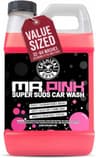
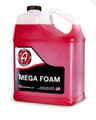
That is a judgment call you should make with the information in front of you. Where a maker states the soap is pH-neutral and coating-safe — as Adam's and Chemical Guys do for the picks above — you have a claim you can hold them to. Where they do not, you are relying on category convention. Both can be fine; only one is verifiable.
The pre-soak matters more on a coated car, not less
There is a persistent idea that a coated car needs less careful washing because the coating protects it. The coating protects against chemical etching and makes dirt release more easily. It does not stop a grit particle dragged under a mitt from scratching — and scratches in a coating are, if anything, more annoying, because correcting them means removing coating you paid for.
So the full safe-wash sequence still applies: rinse, foam pre-soak, two buckets with grit guards, and careful drying. Use a coating-safe snow foam for the pre-soak, and you are removing grit chemically before you ever touch the paint.
One genuine bonus: a coated car dries far more easily, because water sheets off rather than clinging. Fewer towel passes is less contact, and less contact is less marring. That is a real durability benefit of a coating, and it compounds if you wash correctly.
What to avoid entirely on a coating
- Dish soap and household degreasers. Strongly alkaline, built to strip films.
- Wash-and-wax or gloss-enhancing shampoos. Not damaging, just counterproductive and confusing.
- Strong all-purpose cleaners on paint. Fine diluted for arches and tires; keep them off coated panels.
- Brush-type automatic washes.The abrasion is the problem, not the chemistry — see are automatic washes bad for paint.
- Acidic wheel cleaners drifting onto paint. Rinse thoroughly if you use one; better still, use a pH-safe wheel cleaner.