Reason one: a durability claim you can actually check
This is the reason that matters most, and it is the only one with numbers attached. Lay the published claims next to each other and the field sorts itself:
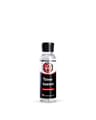
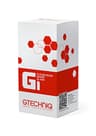
Rain-X: nothing published. Aquapel: up to six times longer than silicone-based products, and “remains highly effective after months of normal use including driving in rain and snow car washing and glass cleaning”. Adam’s Glass Sealant: 4 to 6 months. Gtechniq G1 ClearVision: up to 20,000 miles. GYEON Q² View EVO: up to 24 months / 50,000 km. Chemical Guys HydroView: nothing published, and it is here for a different reason entirely.
Two things are worth saying about that list rather than just presenting it. The first is that these are maker claims, not measurements of ours — we own no units, run no durability tests, and would not pretend to. The second is that the units are not comparable, and that is not an accident. A figure in months flatters a car that sits in a garage. A figure in miles, which is what Gtechniq publishes, is the honest unit for a glass coating, because what wears it off is wiper passes and grit at speed rather than the calendar. GYEON publishes both, which is why its number reads longest, and even GYEON qualifies it in its own FAQ as “up to 24 months, depending on usage and wiper wear”.
Aquapel’s claim is the odd one: a multiple rather than a quantity. “Up to six times longer than silicon-based products” is only as good as the baseline, and since Rain-X publishes no baseline, six times nothing is still nothing you can hold anyone to. We still rank it first, because that claim is aimed squarely at the product you are replacing and because every other difference — fluorinated rather than silicone, a chemical bond rather than a film, the same two minutes of work — points the same way. But do not read it as a guaranteed interval.
Reason two: the application, and the label
Rain-X is a two-pass job by hand. The maker’s own method is apply, haze, reapply for uniform coverage, then buff the haze off — which is more work than most people expect from an $8 bottle, and it has to be repeated every few months because of reason one. Aquapel replaces that with a sealed applicator: one pass, minutes, nothing to decant and nothing left in a garage to dry out. For a lot of people that single change is the whole reason to switch.
There is also something on the Rain-X label worth knowing, and it is not a scare story: the product carries a California Proposition 65 warning stating it “can expose you to chemicals including Naphthalene”. Prop 65 warnings are a disclosure requirement rather than a verdict, and plenty of ordinary garage chemicals carry them. But it does mean gloves and ventilation are sensible, and if the reason you are shopping is that you would rather not be rubbing that onto glass inside a closed garage, that is a legitimate reason and we are not going to talk you out of it.
The flip side is real too. Adam’s wants clayed, properly cleaned glass before you start, and GYEON makes polishing the glass step two of five — not an optional extra, because a bonding coating needs bare glass. Those are both more work than Rain-X, not less. The ranking above is partly a ranking of how much of an afternoon you are willing to spend.
Reason three: you want one bottle that cleans and protects
A glass treatment only bonds to clean glass, so every product here implies a cleaning step you have to do separately. The Chemical Guys HydroView collapses the two: a glass cleaner with SiO2 protection folded into it, which means the bottle that lives in your door pocket for bug splatter is also the one leaving a hydrophobic film behind. Chemical Guys states it cleans and protects “with no streaking in just seconds”, beads water and reduces fogging.
We rank it last here deliberately, and the card says why: Chemical Guys publishes no durability figure for the SiO2 layer, and a product designed to be wiped off cannot build the durability of one designed to cure. Expect it to be measured in washes rather than months. It is on this page because “the protection happens whether or not I felt like coating anything” is a genuine answer to the Rain-X problem — most coats fail because nobody reapplied them — not because it out-lasts anything.
The case for buying Rain-X anyway
Three reasons, and they are strong.
It is the cheapest real test of whether you want this at all. A repellent windshield genuinely changes night driving in rain for some people and does very little for others. Finding that out for the price of a sandwich, from a bottle that treats a windshield many times, is a better first purchase than a premium kit you may not re-coat.
It is everywhere. Every one of the alternatives on this page is a shipping wait. Rain-X is in the next town’s auto parts store, which matters when the re-coat you need is the night before a long drive.
It publishes its method and its limits. A stated 40 degrees F application floor is more than Aquapel, Gtechniq or GYEON give you — none of the three publishes an application temperature range at all. On an October weekend that is a more useful number than a durability claim.
How this page relates to our glass ranking
Our best windshield water repellents page ranks the five mainstream bottles you can buy as general-purpose glass protection, and Rain-X is third on it, as the cheap starting point. This page is a different question: not “what is best” but “what do I buy instead of this specific thing”. That is why it excludes Rain-X by definition, why it adds two single-purpose repellents the general ranking does not carry — Aquapel and the small Gtechniq G1 bottle — and why it is sorted on published durability rather than on all-round value. If you want the whole field instead, start with the ranking.
What none of these change
A repellent treats the outside of the glass. It will not stop the inside fogging in winter — that is cabin moisture and airflow, and only the HydroView claims to touch it. It will not fix wiper chatter on a pitted windshield, and it will not help a screen that is already covered in dried mineral deposits: a treatment bonds to clean glass, so spotted glass has to be decontaminated first. Our water spot remover picks cover that step, and the water spot guide covers the escalation from a wipe to a polish.
Nor does any of this replace the wash. Glass gets most of its abuse from grit dragged across it, the same way paint does — the two-bucket method and a clean mitt protect a treated windshield better than a second coat will. And if your tap water is leaving the marks in the first place, the fix is upstream: our hard-water wash picks stop minerals drying on the car at all.