Swirl & Shine

Best Water Spot Removers for Cars

Hard water leaves minerals on the paint, and a normal wash will not take them off. The four bottles that will, sorted by the only thing that decides whether any of them works: whether your spots are sitting on the clear coat or etched into it.

By Stephen V.Last updated How we rank

Buy the Adam’s Water Spot Remover. It is the only bottle on this page whose listing tells you what is in it — a “professional strength acid-based” formula built on “acid and specialty surfactant technology” — and it is thickened so it clings to a door or a window instead of running into the sills. Knowing you are holding an acid is not a detail. It changes how you work: small sections, in shade, gloves on, rinse properly. The budget pick is the Meguiar’s Water Spot Remover & Polish, which is both the cheapest bottle here and the only one that does anything at all for a spot that has already bitten into the clear coat — because it works by polishing rather than by chemistry.

That split is the whole reason this page exists, and it is the thing most water-spot shopping gets wrong. There are two mechanisms on this shelf and they are not interchangeable. An acidic gel dissolves a mineral deposit sitting on top of the paint. A polish abrades a dish that the deposit has already eaten into the clear coat. Buy the wrong one and you get no result and conclude the product is junk, when in fact you aimed a solvent at a dent.

There is a thirty-second test that tells you which you have, and it costs nothing. Wet the panel. If the marks vanish under the water and come back as it dries, the minerals are sitting on the surface and chemistry will lift them. If the marks are still visible while the panel is wet, they are etched, and no acid on this page will touch them. Detailer guidance frames this the same way: water spots escalate from fresh, to bonded, to etched, and each stage needs a different and more invasive step than the one before.

One warning that applies to every acidic product here, and that none of their makers publishes a figure for: no listing on this page states a dwell time. Three of these four are sold on the fact that they cling and keep working, and not one of them tells you how long is too long. An acid left to dry on a hot panel in sun is how a water-spot problem turns into a clear-coat problem. Until a maker publishes a number, treat it as a one-panel-at-a-time job in the shade.

How this is funded: we earn a commission if you buy through our links, at no extra cost to you. It never changes which product we recommend, and we’ll always tell you who should skip one. Full disclosure.

Quick picks

Ranked on published specs, paint safety and buyer fit. Select a row to jump to the full write-up. We have not tested these products — here is exactly what we do instead.

#ProductBest forPrice
1
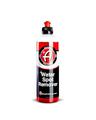
Adam's Polishes Water Spot Remover (16 oz)

Adam's Polishes Water Spot Remover (16 oz)

The only bottle here that tells you plainly what is in it. Adam's calls it a "professional strength acid-based water spot remover" built on "acid and specialty surfactant technology", and it is thickened on purpose so it clings where you put it instead of running off a vertical panel. Naming the chemistry matters more than it sounds: it is the difference between knowing you are using an acid and need to work small, shaded and rinse properly, and finding that out afterwards.

Best overall
$12.27 · View on Amazon

$14.4415% off

Price as of November 22, 2026. #ad How we’re funded

2
3D Eraser Gel Water Spot Remover (16 oz)

3D Eraser Gel Water Spot Remover (16 oz)

The most specific listing of the four about what it dissolves: calcium, magnesium and mineral residue, in an acidic gel that 3D says clings to allow "longer dwell time for deeper penetration". It is the pick for the buyer who wants the acid route and wants to read the word acid on the bottle, and it is the only one that states outright that it lifts bonded minerals "without etching or staining" the surfaces underneath.

Best for bonded deposits
$16.98 · View on Amazon

$17.996% off

Price as of November 22, 2026. #ad How we’re funded

3
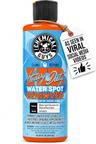
Chemical Guys Heavy Duty Water Spot Remover Gel (SPI10816, 16 oz)

Chemical Guys Heavy Duty Water Spot Remover Gel (SPI10816, 16 oz)

The thickest gel of the four and the one with the clearest published method: "apply, rub gently, and rinse or wipe away". That rinse step is the part worth paying attention to, because it is the only listing here that offers rinsing as the finish rather than wiping — which is the right instinct on anything aggressive enough to dissolve bonded minerals. It is also sold as surface prep, which is the honest reason to own one: waxes and coatings do not bond through a mineral film.

Best for glass
$19.97 · View on Amazon

Price as of November 22, 2026. #ad How we’re funded

4
Meguiar's Water Spot Remover & Polish (A3714, 16 oz)

Meguiar's Water Spot Remover & Polish (A3714, 16 oz)

The odd one out, and the one most buyers actually need. Meguiar's sells this as a water spot remover that "doubles as a gentle polish", usable by hand or on a dual-action machine — which means it works mechanically, not chemically. That is the only mechanism that does anything for a spot that has already bitten into the clear coat, and it is why this is the cheapest bottle here and the one we would reach for second rather than first.

Best for etched spots
$13.49 · View on Amazon

Price as of November 22, 2026. #ad How we’re funded

The picks in full

#1Best overall

Adam's Polishes Water Spot Remover (16 oz)

The only bottle here that tells you plainly what is in it. Adam's calls it a "professional strength acid-based water spot remover" built on "acid and specialty surfactant technology", and it is thickened on purpose so it clings where you put it instead of running off a vertical panel. Naming the chemistry matters more than it sounds: it is the difference between knowing you are using an acid and need to work small, shaded and rinse properly, and finding that out afterwards.

Strengths

  • Publishes its mechanism — acidic actives plus surfactants — where two of the three rivals describe a result instead
  • Thickened by design, so it stays on a door or a window rather than running into the sills
  • The listing covers paint, metal, glass, trim and wheels, so one bottle handles the whole exterior

Trade-offs

  • No dwell time, no pH value and no dilution ratio are published — the three numbers you want for an acid on clear coat
  • An acid will not touch a spot that has already etched into the clear coat; that needs abrasion, not chemistry
  • Water-based acidic actives mean gloves, shade and a thorough rinse, not a casual wipe in the sun

Who should skip it. Skip it if the marks stay visible when the panel is wet. A deposit sitting on top of the paint disappears under water and reappears as it dries; an etched spot is a dish in the clear coat and stays visible wet. Chemistry does nothing for the second kind — buy a polish instead.

ChemistryAcid-based with specialty surfactants, water-based (per listing)
FormThickened liquid that clings (per listing)
Size16 fl oz
SurfacesPaint, metal, glass, trim, wheels; also shower doors and home surfaces (per listing)
AbrasiveNo — chemical action only (per listing)
Dwell timeNot published
pHNot published
DilutionNot published

Specs read from the product listing, on November 16, 2026. “Not published” means the maker doesn’t state that figure.

#2Best for bonded deposits

3D Eraser Gel Water Spot Remover (16 oz)

The most specific listing of the four about what it dissolves: calcium, magnesium and mineral residue, in an acidic gel that 3D says clings to allow "longer dwell time for deeper penetration". It is the pick for the buyer who wants the acid route and wants to read the word acid on the bottle, and it is the only one that states outright that it lifts bonded minerals "without etching or staining" the surfaces underneath.

Strengths

  • Says what it is — an acidic gel — and names the minerals it targets rather than describing a result
  • States it works on clear coat, glass, chrome and polished metal without etching or staining (per listing)
  • Built for vertical and horizontal panels, so a roof and a door get the same dwell

Trade-offs

  • The listing invokes "longer dwell time" as a benefit and then publishes no dwell figure at all
  • Acidic on polished metal is a combination that rewards a test patch, and the listing offers no exclusions to guide you
  • No pH, no dilution and no temperature guidance published

Who should skip it. Skip it if you are going to walk away mid-job. The whole design of this gel is that it stays wet and keeps working, and an acid left to dry in sun on a hot panel is how a water spot problem becomes a clear-coat problem. Work one panel at a time in shade or use the Meguiar's polish instead.

ChemistryAcidic gel (per listing)
FormThick gel, clings for longer dwell (per listing)
Size16 fl oz
SurfacesPaint, glass, chrome, plastic trim, polished metal (per listing)
TargetsCalcium, magnesium and mineral residue (per listing)
AbrasiveNo — acidic gel only (per listing)
Dwell timeNot published
pHNot published

Specs read from the product listing, on November 16, 2026. “Not published” means the maker doesn’t state that figure.

#3Best for glass

Chemical Guys Heavy Duty Water Spot Remover Gel (SPI10816, 16 oz)

The thickest gel of the four and the one with the clearest published method: "apply, rub gently, and rinse or wipe away". That rinse step is the part worth paying attention to, because it is the only listing here that offers rinsing as the finish rather than wiping — which is the right instinct on anything aggressive enough to dissolve bonded minerals. It is also sold as surface prep, which is the honest reason to own one: waxes and coatings do not bond through a mineral film.

Strengths

  • Thick gel clings to vertical surfaces for "longer working time" (per listing), which is what a windshield needs
  • Published method includes rinsing rather than only wiping — the safer finish for a spot remover
  • Explicitly sold as prep that removes the film blocking a wax, sealant or coating from bonding

Trade-offs

  • The listing never states the chemistry — it says safe, not what it is, so you cannot plan around an acid
  • No dwell time published, which on a clinging gel is the figure that decides whether you get a result or a mark
  • Most expensive of the four, and the price buys thickness rather than a stronger published claim

Who should skip it. Skip it if you want to know exactly what you are putting on your paint. Adam's and 3D both say "acidic" on the listing; this one describes the outcome and leaves the mechanism out, and if you are treating a wrapped, matte or freshly coated car that is not good enough.

ChemistryNot published
FormThick gel, clings to vertical surfaces (per listing)
Size16 fl oz
SurfacesPainted panels, chrome trim, aluminum, stainless steel, exterior glass; also boats, RVs, household glass (per listing)
MethodApply, rub gently, rinse or wipe away (per listing)
AbrasiveNo — gel action only (per listing)
Dwell timeNot published
pHNot published

Specs read from the product listing, on November 16, 2026. “Not published” means the maker doesn’t state that figure.

#4Best for etched spots

Meguiar's Water Spot Remover & Polish (A3714, 16 oz)

The odd one out, and the one most buyers actually need. Meguiar's sells this as a water spot remover that "doubles as a gentle polish", usable by hand or on a dual-action machine — which means it works mechanically, not chemically. That is the only mechanism that does anything for a spot that has already bitten into the clear coat, and it is why this is the cheapest bottle here and the one we would reach for second rather than first.

Strengths

  • Works by polishing, so it addresses etched spots that an acid cannot touch
  • Usable by hand with a microfiber or on a dual-action polisher (per listing), so it scales with the damage
  • Cheapest of the four, and it leaves gloss behind rather than a surface that still needs a polish step

Trade-offs

  • Polishing removes clear coat. It is a tiny amount, but it is not reversible and it is not a weekly habit
  • The listing excludes flat, matte and satin finishes outright — wrong product for a wrapped or matte car
  • No abrasive grade, no cut rating and no pad guidance published, so you cannot judge how aggressive it is before you open it

Who should skip it. Skip it if the deposits are fresh and sitting on top of the paint. Abrading clear coat to remove something an acidic gel would have dissolved in a couple of minutes is the wrong trade, and on a hard-water area you will be doing it again next month.

ChemistryRemover and gentle polish — mechanical (per listing)
FormLiquid polish
Size16 fl oz
SurfacesClear coat and single-stage paint, glass, chrome trim, hard plastic, metal (per listing)
Not forFlat, matte or satin finishes (per listing)
ApplicationBy hand with microfiber, or with a dual-action polisher (per listing)
Abrasive gradeNot published
Dwell timeNot applicable — worked, not left to dwell

Specs read from the product listing, on November 16, 2026. “Not published” means the maker doesn’t state that figure.

How we ranked these

Nobody in this category publishes a performance figure, so there is nothing to rank on strength. What the listings do differ on is how much they are willing to tell you, and on a product you are about to rub onto clear coat that turns out to be the useful axis. Five criteria, in the order they decided the list.

1. Does it say what it is? Adam’s says “acid-based”. 3D says “acidic gel”. Meguiar’s says “polish”, which tells you it is mechanical. Chemical Guys describes the outcome — it removes marks “without damaging clear coat, polished metal, or glass” — and never names the mechanism. All four are probably fine on healthy paint. Only three of them let you plan.

2. Chemical or mechanical? This decides whether the bottle is even relevant to your car, so it outranks everything except disclosure. Three chemical, one mechanical, and the mechanical one is the only answer for etched spots.

3. Does it cling? Water spots are worst on horizontal glass and on the top third of doors, which is exactly where a thin liquid runs off before it has done anything. Adam’s, 3D and the Chemical Guys gel are all thickened on purpose, and the Chemical Guys gel is the thickest and the one that states the longest working time.

4. What surfaces is it rated for, and what is excluded? This is where Meguiar’s loses points it did not have to: its listing excludes flat, matte and satin finishes outright. That is honest and useful, and it also means it is the wrong bottle for a wrapped car. The three gels list paint, glass, chrome, polished metal and trim between them, and none of them publishes an exclusion at all — which is not the same as being safe everywhere.

5. Cost per job. All four are 16 oz, all four are in the same narrow price band, and the live prices are on the cards above. At these volumes cost per job is close enough that it only breaks ties — which is why it is the last criterion rather than the first.

Where water spots come from, and why your shampoo cannot help

A water spot is not dirt. It is what gets left behind when a drop of hard water evaporates on a panel: the water goes, the dissolved calcium and magnesium stay, and what you see is the mineral ring. 3D’s listing names those two minerals specifically, which is the most concrete thing any of these makers says about what is actually being removed.

Car shampoo is designed to lift oily road film and loose grit with surfactants. It is pH balanced precisely so that it does not attack things bonded to the paint — that is the same property that makes it safe over wax and ceramic coatings. A product cannot be gentle enough to use weekly over a coating and aggressive enough to dissolve bonded minerals. This is why a mineral-heavy driveway beats a good shampoo, and it is not a failing of the shampoo. If your tap water is the problem in the first place, the honest fix is upstream: our hard-water wash picks cover the rinseless washes and drying aids that stop minerals ever drying on the paint, which is cheaper and safer than removing them afterwards.

Fresh, bonded, etched: the three stages and what each one needs

Fresh. A spot that dried this week, on paint with wax or a coating still on it. Often a drying aid and a plush towel are enough, and a rinseless wash will take most of it. Reaching for an acid at this stage is overkill.

Bonded. The deposit has been through a few heat cycles and will not wipe off, but it still disappears when the panel is wet. This is the stage all three gels on this page are built for, and the stage where they genuinely work. Adam’s and 3D both describe dissolving and lifting minerals rather than abrading anything.

Etched. The mineral sat long enough, hot enough, to eat a shallow dish into the clear coat. The mark is visible wet. Chemistry is finished here, and the only route is to take a tiny amount of clear coat off until the floor of the dish is the new surface. That is the Meguiar’s polish, by hand or on a dual-action machine. If it does not clear, the next step up is a compound — Meguiar’s own Ultimate Compound is sold on removing scratches, swirls, oxidation and water spots with micro-abrasive technology, and we rank that whole field on our scratch remover page and swirl remover page. Correction removes material and you only get so much of it, so this is a once-in-a-while step, not a maintenance habit.

One more case worth separating out, because people confuse it with water spotting: if the paint feels gritty rather than looking marked, that is bonded contamination, not minerals, and the answer is clay followed by an iron remover — the plastic-bag test over a lubricated panel will tell you in a few seconds.

How to use any of these without making it worse

None of these makers publishes a dwell time, so this is the method we would use and the reasoning behind each step rather than a maker’s instruction sheet.

Wash the car first. Everything on this page needs to reach the mineral deposit, not a layer of road film sitting over it. Chemical Guys makes this explicit in the other direction: it sells its gel as prep that removes the grime and debris that stop a wax or sealant bonding.

Work in shade, on a cool panel, one section at a time. Sun and heat are what turn an acidic gel from a cleaner into an etching agent, and they are the only variable here you fully control.

Test a small area first. Especially on polished aluminum, anodized trim, or anything chrome-look that might be plastic. 3D states its gel works on polished metal without etching or staining; nobody else commits either way.

Rinse, do not just wipe. Chemical Guys’ published method ends “rinse or wipe away”, and rinsing is the better half of that choice. Wiping an acid off with a towel moves it around; it does not remove it.

Re-protect afterwards. Any product aggressive enough to strip minerals has also stripped whatever wax or sealant was over them. That is the point at which to put a layer back on, and it is the reason this job belongs immediately before a protection step rather than a week after one. Our wax ranking and spray coating ranking both cover what to use.

Glass is a different job, and mostly a preventable one

Windshields collect water spots faster than paint because they are near-horizontal and because wipers smear whatever lands on them. Glass is also harder than clear coat, which is why all three gels here list exterior glass and why the Chemical Guys gel — the thickest of them — is our pick for that surface specifically.

Removing them is the second-best answer. The better one is to stop water sitting on the glass at all: a hydrophobic treatment makes rain bead and leave at speed instead of pooling and drying in place. We rank that whole category on best windshield water repellents, and if the bottle you have been using is Rain-X, our Rain-X alternatives page covers the treatments that publish a durability claim where Rain-X publishes none.

Prevention, honestly, is the cheaper product

Every bottle on this page exists because water was allowed to dry on a car. Four habits remove most of the demand for them, and three of them cost nothing:

Do not wash in direct sun. Panels dry faster than you can rinse, which is the exact mechanism that creates the spots.

Rinse top down and dry immediately. A plush drying towel or a blower gets water out of trim gaps and mirror housings before it has a chance to evaporate — and the blower is the only one of the two that reaches a badge surround.

Keep protection on the paint. A wax, sealant or spray coating does not stop minerals landing, but it makes water bead and run instead of sheeting flat and sitting, and it gives you a sacrificial layer that takes the hit instead of the clear coat.

Never let sprinklers or a hose dry on the car. Lawn sprinkler water is the single most common cause of severe spotting we see described, because it hits the same panels repeatedly and nobody is standing there to dry it. Our guide to removing water spots step by step covers the escalation in full, and drying a car without scratching is the technique half.
Frequently asked questions

What is the best water spot remover for cars?

The Adam's Water Spot Remover, for mineral deposits sitting on the paint. It is the only bottle in our lineup whose listing states its mechanism - a professional-strength acid-based formula with specialty surfactants - and it is thickened so it clings to vertical panels rather than running off. If the spots are still visible when the panel is wet, they are etched into the clear coat and no acidic product will help; use the Meguiar's Water Spot Remover & Polish, which works mechanically.

How do I know if a water spot is etched into the paint?

Wet the panel and look at it. If the marks disappear under the water and reappear as it dries, the minerals are sitting on top of the clear coat and a chemical remover will lift them. If you can still see the marks while the panel is wet, the deposit has etched a shallow dish into the clear coat, and the only fix is to remove a small amount of clear coat with a polish or compound.

Will car wash soap remove water spots?

No, and that is by design. A car shampoo is pH balanced so it lifts road film without attacking anything bonded to the paint - the same property that makes it safe to use over wax and ceramic coatings. Bonded calcium and magnesium need either an acidic product to dissolve them or an abrasive one to remove them. If hard water is your underlying problem, a rinseless wash and a proper drying routine prevent far more spotting than any shampoo will remove.

Are acidic water spot removers safe on car paint?

On healthy clear coat, used as directed and rinsed off, they are sold as safe and all four makers say so. The risk is not the chemistry, it is the dwell: none of these listings publishes a dwell time, and an acidic gel left to dry on a hot panel in direct sun can mark the clear coat itself. Work one panel at a time in shade, on cool paint, test an area first on polished metal or trim, and rinse rather than only wiping.

Can I use a water spot remover on glass and wheels?

Mostly yes, and glass is where these products earn their keep - all three gels list exterior glass, and the Chemical Guys gel is the thickest, which is what a near-horizontal windshield needs. Adam's additionally lists wheels and trim. The exception is the Meguiar's: it is a polish, and its listing excludes flat, matte and satin finishes, so keep it away from wrapped or matte panels.

Do I need to wax the car after removing water spots?

Yes. Anything strong enough to strip bonded minerals has also taken off whatever wax or sealant was sitting over them, and a polish removes protection along with the clear coat it abrades. Plan the job so the protection step follows immediately - that is also why Chemical Guys sells its gel as surface prep, since a wax or coating will not bond properly through a mineral film in the first place.

Sources

Keep reading