Swirl & Shine

Best Foam Cannons for Gas Pressure Washers

A gas machine pushes two to four times the water an electric does, and that changes which cannon works and which one just leaks. The models that publish a flow window wide enough to cover a gas washer, and the orifice question nobody tells you about.

By Stephen V.Last updated How we rank

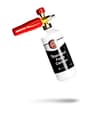
The Chemical Guys TORQ Max Foam 8 is the safest buy for a gas washer, for one specific reason: it is the only cannon here that publishes its operating window. Chemical Guys states a 500–3,500 PSI range, a 1.4 GPM minimum with 2.0 GPM recommended, and an upper limit — “Never Exceed 5.3 GPM” — which is the figure that actually matters when you are feeding it from a gas engine. A typical consumer gas washer sits around 2.3–3.0 GPM and 2,600–3,200 PSI, comfortably inside that window.

If you are running it week after week, buy the MTM Hydro PF22 instead. Brass and stainless internals, a wide-mouth 1 L bottle and a genuinely useful spray-fan and mix adjustment make it the one cannon here built for the pressure and heat a gas machine puts through it. MTM publishes no minimum flow figure, which we flag as a gap rather than a reassurance — but it is the enthusiast standard, and brass does not soften.

Before anything else, check one thing: does your trigger gun take a 1/4-inch quick-connect?Every cannon on this page does, and on a gas washer that is normally fine — gas guns are overwhelmingly M22 or quick-connect. The exception that catches people is Kärcher’s own bayonet foam nozzle, which Kärcher states outright is “not compatible with K1700-K2300 power washers or gas pressure washers”. If you bought a Kärcher accessory for a gas machine, that is why it does not fit. We have not bench-tested foam density on any of these; every figure below is the maker’s published specification, read on the date shown on each card.

How this is funded: we earn a commission if you buy through our links, at no extra cost to you. It never changes which product we recommend, and we’ll always tell you who should skip one. Full disclosure.

Quick picks

Ranked on published specs, paint safety and buyer fit. Select a row to jump to the full write-up. We have not tested these products — here is exactly what we do instead.

#ProductBest forPrice
1
Chemical Guys TORQ Professional Max Foam 8 Cannon

Chemical Guys TORQ Professional Max Foam 8 Cannon

The best-known name in foam cannons, and a safe middle pick. It foams thickly, the adjustment is easy to learn, and it pairs cleanly with Chemical Guys soaps if you're buying into one ecosystem. Build isn't quite MTM's, but it's a step above the sub-$20 crowd.

Best published flow window
$99.97 · View on Amazon

Price as of October 17, 2026. #ad How we’re funded

2
MTM Hydro PF22 Foam Cannon

MTM Hydro PF22 Foam Cannon

The enthusiast standard. Brass and stainless internals, a wide-mouth bottle, and a genuinely useful spray-fan and mix adjustment mean it produces thick, clinging foam and keeps doing it for years. If you buy one cannon for life, it's this.

Best build for sustained use
$94.49 · View on Amazon

Price as of October 17, 2026. #ad How we’re funded

3
Adam's Polishes Standard Foam Cannon

Adam's Polishes Standard Foam Cannon

A clean, well-supported mid-range cannon from a brand known for good customer service. It foams well, adjusts easily, and slots into the Adam's soap-and-accessory range if that's the ecosystem you're building.

Best published minimum
$50.99 · View on Amazon

Price as of October 17, 2026. #ad How we’re funded

4
Tool Daily Foam Cannon (1 L)

Tool Daily Foam Cannon (1 L)

The value pick that keeps winning: a 1L cannon with a 1/4-inch quick-connect and five spare nozzles for the price of a fancy coffee. It foams genuinely well for most washers — the plastic won't last a decade, but you'll have foamed a lot of cars by then.

Cheapest way to try it
$18.99 · View on Amazon

$19.995% off

Price as of October 17, 2026. #ad How we’re funded

The picks in full

#1Best published flow window

Chemical Guys TORQ Professional Max Foam 8 Cannon

The best-known name in foam cannons, and a safe middle pick. It foams thickly, the adjustment is easy to learn, and it pairs cleanly with Chemical Guys soaps if you're buying into one ecosystem. Build isn't quite MTM's, but it's a step above the sub-$20 crowd.

Strengths

  • Reliable thick foam with simple fan and ratio adjustment
  • Pairs naturally with Chemical Guys snow-foam soaps
  • Widely stocked, easy to find replacement parts

Trade-offs

  • More plastic in the build than the premium MTM
  • Priced above the budget cannons that foam nearly as well

Who should skip it. Skip it if you want the most durable cannon — the MTM Hydro PF22 uses more metal for not a lot more money.

Connection1/4" quick-connect
Bottle32 oz, unscrews to fill (per listing)
AdjustableSpray fan + soap mix
Body materialBrass components, plastic parts (per maker)
Min pressure to foamNot published

Specs read from the product listing, on September 22, 2026. “Not published” means the maker doesn’t state that figure.

#2Best build for sustained use

MTM Hydro PF22 Foam Cannon

The enthusiast standard. Brass and stainless internals, a wide-mouth bottle, and a genuinely useful spray-fan and mix adjustment mean it produces thick, clinging foam and keeps doing it for years. If you buy one cannon for life, it's this.

Strengths

  • Brass/stainless build outlasts the all-plastic budget cannons
  • Wide-mouth 1L bottle is easy to fill and mix
  • Consistent thick foam with a wide, adjustable spray fan

Trade-offs

  • Ships with a 1/4-inch quick-connect; confirm it matches your washer
  • Costs several times what a budget cannon does

Who should skip it. Skip it if you'll wash a handful of times a year — a budget cannon foams nearly as well for occasional use and saves the premium.

Connection1/4" quick-connect
Bottle1 L wide-mouth
Body materialBrass / stainless internals
AdjustableSpray fan + soap mix
Min pressure to foamNot published

Specs read from the product listing, on July 21, 2026. “Not published” means the maker doesn’t state that figure.

#3Best published minimum

Adam's Polishes Standard Foam Cannon

A clean, well-supported mid-range cannon from a brand known for good customer service. It foams well, adjusts easily, and slots into the Adam's soap-and-accessory range if that's the ecosystem you're building.

Strengths

  • Consistent foam and easy adjustment out of the box
  • Strong brand support and warranty reputation
  • Pairs with Adam's Mega Foam and wash soaps

Trade-offs

  • Nothing it does the cheaper cannons don't, for more money
  • Mostly plastic construction

Who should skip it. Skip it if you're not buying other Adam's products — the value case is weaker as a standalone cannon than a budget option.

Connection1/4" quick-connect
Bottle1 L / 33.8 oz (per maker)
AdjustableSpray fan + soap mix
Body materialNot published
Min pressure to foam870 PSI, 1.3 GPM minimum (per maker)

Specs read from the product listing, on September 22, 2026. “Not published” means the maker doesn’t state that figure.

#4Cheapest way to try it

Tool Daily Foam Cannon (1 L)

The value pick that keeps winning: a 1L cannon with a 1/4-inch quick-connect and five spare nozzles for the price of a fancy coffee. It foams genuinely well for most washers — the plastic won't last a decade, but you'll have foamed a lot of cars by then.

Strengths

  • Foams surprisingly thickly for the price
  • 1/4-inch quick-connect fits most electric washers, plus spare nozzles
  • Cheap enough to treat as disposable

Trade-offs

  • All-plastic build; the seals and threads wear over time
  • Less consistent unit-to-unit than the premium cannons

Who should skip it. Skip it if you wash weekly and hate replacing gear — the plastic won't match an MTM's lifespan under heavy use.

Connection1/4" quick-connect
Bottle1 L
Included5 pressure-washer nozzles
Body materialPlastic
Min pressure to foamNot published

Specs read from the product listing, on July 21, 2026. “Not published” means the maker doesn’t state that figure.

Why a gas washer needs a different conversation

A foam cannon is a venturi device. High-pressure water accelerates through a small brass orifice, the drop in pressure draws soap solution out of the bottle, air gets mixed in, and a mesh pack whips the result into foam. Three of those four stages are sized to a flow rate, which is why swapping machines changes the output so much.

A mainstream electric washer moves roughly 1.1–2.3 GPM. A consumer gas unit typically moves 2.3–3.0 GPM at higher pressure, and commercial units go well beyond that. So on a gas machine you have two new concerns that an electric owner never meets:

  • An upper flow limit.Too much water through a cannon sized for an electric and you get a wet, thin spray instead of foam, because the soap-to-water ratio collapses and the mesh cannot keep up. This is the number to look for, and almost nobody publishes it. Chemical Guys does: never exceed 5.3 GPM.
  • Material stress.Higher pressure, higher flow and a hot pump behind it is a harder life for plastic threads and seals than a 1700 PSI electric gives them. This is the case for brass.

What does notchange is paint safety. Detailer guidance puts the safe window for washing clear coat at roughly 1,200–1,900 PSI, and a gas machine is far above that at the trigger. The foam step itself is low-pressure — a cannon is one of the gentlest things you can point at a car — but the rinse afterwards needs a wide tip and real standoff distance. Our PSI guide for cars and gas vs electric for cars both cover that, and the second is worth reading before you point a gas washer at a car at all.

The orifice: the part that actually sets foam thickness

Inside every cannon is a small brass orifice, and its bore is matched to a flow rate. A 1.1 mm orifice is the common size shipped for machines around 1.2 GPM; higher-flow units want a larger bore, and a mismatch in either direction gives you thin foam. Run a high-flow gas machine through an electric-sized orifice and the cannon is effectively choked; run a low-flow electric through a large bore and there is not enough velocity to draw soap at all.

This is the single most useful thing to know when a cannon “does not foam” on a new machine, and it is why our troubleshooting guidestarts there rather than with the soap. Orifices are sold separately and cost very little; if you own a gas washer and a cannon that disappoints you, that is the first thing to change — not the cannon, and not the soap.

The published windows, side by side

This table is deliberately mostly empty, and the emptiness is the finding: three of the four cannons in our registry publish no flow window at all.

 Published minimumPublished maximumBodyConnection
Chemical Guys TORQ Max Foam 81.4 GPM (2.0 recommended), 500 PSI5.3 GPM, 3,500 PSIBrass components, plastic parts1/4" quick-connect
MTM Hydro PF22Not publishedNot publishedBrass / stainless internals1/4" quick-connect
Adam’s Standard Foam Cannon870 PSI, 1.3 GPMNot publishedNot published1/4" quick-connect
Tool Daily Foam CannonNot publishedNot publishedPlastic1/4" quick-connect

Read that as a shopping instruction. If your gas washer is a standard 2.3–3.0 GPM consumer unit, all four will work — but only one of them has told you so in writing. If your machine is a 4 GPM-plus commercial unit, the TORQ’s 5.3 GPM ceiling is the only published assurance on this page that you are not over the top of the design, and the others are an unknown we are not going to resolve by guessing.

Fitting a cannon to a gas washer, step by step

  1. Identify the gun end.Most gas washers use an M22 threaded trigger gun or a 1/4-inch quick-connect socket. If it is M22, an M22-to-quarter-inch adapter is a few dollars — cannon makers sell them for exactly this. Check whether your M22 is a 14 mm or a 15 mm inner stem, because the two will thread together and still leak.
  2. Check the flow against the cannon’s window.Your washer publishes a GPM figure; use it. Below the cannon’s minimum you get no foam; above its maximum you get wet spray.
  3. Match the orifice to the flow if the cannon offers a choice. This is where a gas-machine owner gets the biggest improvement for the least money.
  4. Mix the soap for a cannon, not a bucket.Cannon dilutions are much stronger than bucket dilutions. Chemical Guys publishes 1–3 oz of Honeydew in a 32 oz cannon tank for a high-foam touchless wash; Adam’s publishes 1–2 oz for cannons and guns. Our foam cannon soap ratio guide collects every published figure in one place.
  5. Dwell, then rinse with a wide tip.Chemical Guys’ own guidance is to leave snow foam on for “at least 5 minutes, but ideally closer the 10 minutes” without letting it dry. Then rinse at distance — that is the part of a gas-washer wash where the paint risk actually lives.

One honest warning about gas washers and cars

We rank electric machines above gas for car work everywhere else on this site, and nothing on this page changes that. A gas washer’s advantages — no cord, high flow, real pressure — are driveway and siding advantages. On paint, the pressure is a liability you spend the whole wash managing, and the noise means you are not doing this at 7 am. If you already own one, a cannon is absolutely the right accessory and this page is the right shortlist. If you are buying a machine primarily to wash cars, read gas vs electric first and probably buy electric.

Prices, and what we have not done

Live prices and the date they were read are on the cards above; we never type a number into the prose. In rough bands the Tool Daily is a fraction of the others, the Adam’s and the TORQ sit in the middle, and the MTM PF22 is the premium.

To be explicit: we have not measured foam density, timed cling, or run any of these cannons on a gas machine with a flow meter. Every figure above is the manufacturer’s published specification, cited below with the date it was read, and the “Not published” cells are the most useful part of the table. More on that in how we rank.

Frequently asked questions

Will a foam cannon work on a gas pressure washer?

Yes, as long as the cannon's flow window covers your machine and the connection matches. Gas washers typically move 2.3 to 3.0 GPM at 2,600 to 3,200 PSI, which sits inside the only published window in this category: Chemical Guys rates the TORQ Max Foam 8 for 500 to 3,500 PSI, a 1.4 GPM minimum and "Never Exceed 5.3 GPM". The connection is normally a 1/4-inch quick-connect or an M22 thread with a cheap adapter. The notable exception is Karcher's own bayonet foam nozzle, which Karcher states is not compatible with gas pressure washers.

Why is my foam thin on a gas pressure washer?

Usually the orifice, not the soap. The small brass orifice inside a cannon is sized to a flow rate — around 1.1 mm for a roughly 1.2 GPM electric — and a high-flow gas machine pushed through an electric-sized bore produces a wet, thin spray rather than foam because the soap-to-water ratio collapses. Orifices are sold separately and cost very little, so matching the bore to your machine's published GPM is the first and cheapest fix. After that, check the soap dilution, which needs to be far stronger for a cannon than for a bucket.

Can a gas pressure washer damage car paint?

It can, because it operates well above the pressure range detailers use on clear coat, which is roughly 1,200 to 1,900 PSI. The foam step itself is low pressure and perfectly safe; the risk is in the rinse. Use the widest tip you have, keep real standoff distance, keep the wand moving, and stay away from panel edges, badges, existing chips and trim seals, where high-pressure water does the most harm.

Do I need a different soap for a gas washer?

No — the soap is chosen for your paint, not your machine. What changes is the dose. Cannon dilutions are much more concentrated than bucket dilutions: Chemical Guys publishes 1 to 3 oz of Honeydew into a 32 oz cannon tank versus 1 to 3 oz into a 5-gallon bucket. A higher-flow machine pushes more water through the same bottle of solution in less time, so if foam looks weak, increase the concentrate before you blame the cannon.

Is a brass foam cannon worth it over a plastic one?

On a gas washer, more than on an electric. Higher flow, higher pressure and a hot pump behind it is a harder life for plastic threads and seals, and the failure point on a cheap cannon is almost always a thread or an O-ring rather than the mesh. A plastic cannon will still foam well — the Tool Daily is on this page for exactly that reason — but if you wash weekly behind a gas machine, brass and stainless internals are the part of the purchase that lasts.

What is the maximum GPM a foam cannon can take?

Only one maker in our registry publishes an answer: Chemical Guys states "Never Exceed 5.3 GPM" for the TORQ Max Foam 8. MTM Hydro, Adam's and Tool Daily publish no upper limit for their cannons at all, so for a commercial-grade machine above roughly 4 GPM, the TORQ's figure is the only published assurance on this page. We are not going to estimate ceilings the makers have not stated.

Sources

  • Chemical Guys — TORQ Professional Foam Cannon Max Foam 8 — The published operating window for a mainstream cannon, used here as the reference figure: minimum 1.4 GPM with 2.0 GPM recommended and "Never Exceed 5.3 GPM", a 500–3,500 PSI range, and a standard 1/4-inch quick-connect that attaches to gas or electric machines inside that range (accessed September 6, 2026)
  • Garage Nirvana — Foam Cannon Orifices: An In-Depth Guide — On the brass orifice sizing a foam cannon to its machine — 1.1 mm for ~1.2 GPM electrics up to much larger bores for high-flow units — and mismatch causing thin foam (accessed August 18, 2026)
  • Kärcher — FJ 6 Foam Nozzle — The maker's own compatibility list for its bayonet foam nozzle: fits all K1–K5 machines, needs Adapter M (2.643-950.0) on trigger guns made 2010 or earlier, and the explicit exclusion — "The FJ 6 is not compatible with K1700-K2300 power washers or gas pressure washers" (accessed September 6, 2026)
  • MJJC — M22 Thread to 1/4-inch Quick Connection Adapter — Foam-cannon maker's adapter listing confirming M22 trigger guns (male or female thread) convert to the 1/4-inch quick-connect cannons use (accessed August 18, 2026)
  • AR Blue Clean — Get Connected: Understanding M22 Hose Fittings — Manufacturer explanation of M22 fittings: identical 22 mm outer threads but 14 mm versus 15 mm inner stems, so two fittings can thread together and still leak (accessed August 18, 2026)
  • Chemical Guys UK — What Does Snow Foam Actually Do? — Maker guidance on dwell: leave snow foam on for "at least 5 minutes, but ideally closer the 10 minutes", do not let it begin drying on the surface, and treat it as a pre-wash that prepares a contact wash rather than replacing one (accessed September 6, 2026)
  • Chemical Guys — Honeydew Snow Foam Auto Wash (CWS_110) — The maker's published dilutions — the only published foam-cannon RATIO of the two snow foams here: “For a High Foam Touchless Wash, add 1 to 3 oz of Honeydew Snow Foam to a 32 oz solution tank of foam cannon or gun”, and for contact washing “Add 1 to 3 oz to 5-gallon bucket”. Chemistry and claims: “pH-balanced” and a “pH neutral formula won’t impact any coatings” with no numeric pH value published; “Safe for all exterior surfaces, including paint, wax, sealants, and ceramic coatings”; “Produces lots of thick, clinging foam that lifts dirt and grime off the surface” via “powerful hypersurfactants”. The method published is foam, then “Wash the surface with a wash mitt, then rinse with clean water” — the maker never uses the word “pre-wash”. Sold in 16 oz, 64 oz and 1 gallon, and the page carries a Proposition 65 warning naming 1,4-dioxane (accessed October 17, 2026)
  • Adam's Polishes — Mega Foam Car Soap — The maker's published dosing and chemistry: “pH Neutral, Concentrated formula”, “our most concentrated shampoo ever released”, a “concentrated blend of lubricants, surfactants, and high-foaming agents” that “provides the highest amount of suds and foam while avoiding water spots or sunspots”. The ONLY dose published is “1-2 ounces for Foam Guns and Foam Cannons” — an absolute quantity with NO water volume and therefore no ratio; no bucket amount is published at all. On protection: “Since this product is pH neutral it will not add or take away protection” and “As this product is pH neutral, it will not remove wax, sealants, or degrade a ceramic coating”. On role: “Mega Foam Car Soap can be used at any time during your washing process”, including “a pre-wash before clay bar decontamination or polishing jobs”, and “Pair Mega Foam with your favorite wash mitt or pad for safer washing” — so the maker does not classify it as pre-wash-only. Sold in 16 oz, 16 oz 2-pack and gallon (accessed October 17, 2026)
  • Chemical Guys — Can You Pressure Wash a Car? — Detailer-brand guidance putting the safe car-wash pressure window at roughly 1,200–1,900 PSI (accessed July 21, 2026)

Keep reading