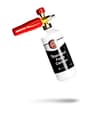
Why electric machines are a different buying problem
A foam cannon is a passive device. It has no pump of its own: your washer pushes water through a small orifice, which draws soap out of the bottle and mixes it with air. Everything about how thick the foam comes out is therefore decided by what your machine delivers — and the figure that matters is volume, not pressure.
Gas machines commonly move 2.0 to 3.0 GPM. Household electrics typically move 1.1 to 1.8 GPM. That is a genuinely different operating range, and it is why a cannon that is universally praised in reviews can disappoint on a budget electric: the reviewer had the water to feed it.
The published minimums, side by side
Only two of the five cannons here publish a flow requirement at all. We treat the absence of a figure as an unknown, not as permission — so the column below reads “Not published” rather than “any machine”.
| Cannon | Published minimum | What that means on an electric |
|---|
| MTM Hydro PF22 | Not published | Adjustable mix and fan give you room to tune on a low-flow machine |
| Tool Daily 1 L | Not published | Cheap enough to experiment with; five spare nozzles in the box |
| Chemical Guys TORQ Max Foam 8 | 1.4 GPM minimum, 2.0 GPM recommended, never exceed 5.3 GPM; 500–3,500 PSI | Rules out 1.1–1.2 GPM machines outright; ideal from 1.76 GPM up |
| DUSICHIN DUS-018 | Not published | Adjustable brass tip is the useful part on a modest machine |
| Adam’s Standard Foam Cannon | 870 PSI and 1.3 GPM minimum | Fine on a Sun Joe SPX3000; below spec on a Greenworks 1800 or K1700 |
Match the orifice to the machine
The brass orifice inside the cannon is the part that does the metering, and it is sized to a flow range. Garage Nirvana’s breakdown of cannon orifices puts roughly 1.1 mm at the 1.2 GPM electric end of the scale, with much larger bores for high-flow gas units, and describes mismatch as a direct cause of thin foam. An orifice that is too large for your pump bleeds pressure and the cannon never atomises properly; too small and you choke the machine.
Practically, that means two things. On a low-flow electric, prefer a cannon whose mix and fan adjust — the PF22 and the DUS-018 both do — because adjustment is how you recover thin foam without buying parts. And if you already own a cannon that foams badly, the orifice is worth checking before you replace the whole thing; our PSI and GPM page works through the arithmetic, and foam cannon not foaming is the troubleshooting order.
Confirm the fitting before you order
All five cannons here ship with a 1/4-inch quick-connect. Many electric trigger guns are M22 threaded instead, and MJJC’s adapter listing confirms M22 guns in either thread gender convert to the quick-connect fitting a cannon expects. It is a cheap part, but it is also the reason a cannon sits in a box for a week. Kärcher’s own system is the exception worth checking carefully — see foam cannons for Kärcher.
Which cannon for which electric machine?
| Your machine | Published flow | What to buy |
|---|
| Greenworks 1800 | 1.1 GPM | MTM Hydro PF22 or Tool Daily — both adjustable, neither publishes a minimum above your flow |
| Kärcher K1700 | 1.2 GPM | Same two, plus check the Kärcher fitting adapter first |
| Sun Joe SPX3000 | 1.76 GPM | Anything on this page, including the Chemical Guys and Adam’s cannons |
| Greenworks 2300 | Up to 2.3 GPM | Clears every minimum here, including the Chemical Guys 2.0 GPM recommendation |
| Active 2.0 | 2.0 GPM | MTM Hydro PF22 — the high-flow machine deserves the metal cannon |
| Cordless washers | Low and often unpublished | See cannons for cordless machines — this is a different problem |
If your machine makes less than roughly 1.3 GPM, a hose-end foam gun is also worth a thought: it will never match a cannon, but it is designed for low pressure rather than tolerating it. Our garden-hose foam gun picks and the cannon versus gun comparison cover that trade.
How this page differs from our other cannon pages
Getting thick foam out of a modest machine
Flow sets the ceiling, but technique decides whether you reach it. Four things matter more than the cannon on a 1.1 to 1.8 GPM electric:
- Use a proper snow foam, not shampoo. A cannon is only as thick as what you put in it — see the best soaps for a foam cannon.
- Mix with warm water. Concentrate dissolves properly instead of sitting at the bottom of the bottle.
- Open the soap dial, close the fan. A narrower fan from a low-flow machine lands wetter, thicker foam on the panel.
- Let it dwell, within reason. Foam works by time, not force — how long to leave snow foam covers the limits, and never let it dry.
Which one should you buy?
For most electric owners, the MTM Hydro PF22. It is the cannon you keep: brass and stainless internals, a 1 L wide-mouth bottle that is easy to fill, and adjustment on both the mix and the fan, which is exactly what a low-flow machine needs. Its honest downsides are the price and the standard 1/4-inch quick-connect you need to match.
Buy the Tool Daily instead if the point is to find out whether foaming is for you: it foams genuinely well, includes five nozzles, and is cheap enough to treat as disposable — the plastic will not last a decade. Buy the Chemical Guys TORQ Max Foam 8 only if your machine meets its published 1.4 GPM floor, ideally 2.0. The DUSICHIN DUS-018 is the budget pick with a brass tip worth having, and the Adam’s cannon makes sense if you are already buying Adam’s soaps and your washer clears 870 PSI and 1.3 GPM.