The three things that change when the vehicle gets big
1. Coverage per pass, not absorbency
Every drying towel is absorbent. What separates them on a truck is how much panel each pass covers before the towel needs turning over, because the number of passes is what decides both how long drying takes and how many chances you give yourself to drag something across the clear coat. The Jumbo Plush is the only towel in our registry that publishes both a size and a GSM figure — 33 x 29 inches at 1,500 GSM — which is why it is here rather than the towels we rank first on our general drying towel page. Two of those do not publish a size at all, which we record as unknown rather than estimating.
2. Reach, which is a published number on exactly one product
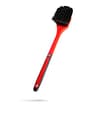
Arches, fender liners and the underbody edge are where a truck gets genuinely filthy, and they are deeper on a truck than on anything else you can buy. The Adam’s Fender Brush publishes a 20-inch handle with a rubber grip, flocked premium nylon bristles and a 2-inch bristle head. That handle length is the spec: it is the difference between cleaning a liner and poking at the first four inches of it. The maker pairs it with its own all-purpose cleaner; it does not publish an overall length or a weight, which we print as unknown. Our wheel well guide is the method that goes with it.
3. Soap volume, which is a dilution question
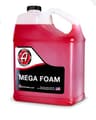
A big vehicle needs more foam, and buying more foam by buying bigger bottles of a weak product is the expensive route. Adam’s Mega Foam is recorded in our registry as an ultra-concentrate, pH neutral, coating-safe, with its published role as a pre-wash soak through a foam cannon. That combination is what you want on a truck: the pre-wash soak does the heavy lifting on the lower third of the vehicle so that your mitt is not the thing removing caked road film. The soap ranking behind this pick is on our best soap for a foam cannon page.
Truck wheels are the part most lists get wrong
A 20-inch truck wheel has a barrel you cannot reach into with a face brush, and the inside of that barrel is where brake dust accumulates until it bakes on. The VIKING V+ barrel brush publishes a 17-inch length and is sold for the inner barrel specifically. It does not publish a bristle material or a finish-safety statement, both of which we record as unknown — so if your wheels are polished, chrome or diamond-cut, test it on the back of a spoke first rather than trusting a tool whose bristle material nobody states.
Pair it with a face brush rather than replacing one. The two tools do different jobs, and our wheel brush ranking puts the soft face brush first for exactly that reason. If you would rather buy the whole wheel setup at once, the wheel cleaning kit under $25 puts a cleaner, both brushes and a sealant inside one budget.
Method changes that cost nothing
Work in horizontal bands rather than panel by panel. On a sedan you can wash the whole side before the first section dries; on a crew cab in any kind of sun you cannot, and a dried-on soap film is both a water spot risk and a reason people rewipe dry paint. Do the roof and upper half first, rinse it, then the lower half, which is where the grit lives.
Use a step rather than reaching. The two worst scratches on most trucks are on the roof rail and the bed rail, and both come from leaning a forearm or a buckle onto the paint while stretching for the middle of the roof. A folding step costs less than any product on this page and removes the problem entirely.
And keep the two-bucket discipline even though the wash takes longer. The two-bucket method matters more on a large vehicle, not less: you are picking up more grit, from a dirtier lower third, over more passes. That is also why the budget pick here is a two-pack rather than a single premium mitt.
What we left out
No pressure washer, no foam cannon and no wax. The washer is the subject of its own ranking, linked above, and the right answer there is driven by GPM rather than by anything on this page. Foam cannons are matched to the washer you own rather than to the vehicle you are washing, which is what the fitment-based cannon picker is for. And wax selection does not change with vehicle size — only the amount of time it takes to apply it does, which is a reason to look at a ceramic spray rather than a paste on a vehicle this big.