What the purple actually is
It is the most satisfying thing in car care, and it is also genuinely informative rather than theatrical.
The active chemistry in these products reacts with ferrous particles and converts them into a water-soluble compound that rinses away. The color change — clear to violet, deepening toward red-purple — is a by-product of that reaction, not a dye in the bottle. Chemical Guys are explicit about the reading: lighter shades indicate lower levels of contamination, deeper purple indicates more.
Which makes it a free diagnostic. Spray a panel and watch. Barely any color means the paint is clean and you do not need to do this again for a while. A sheet of dark purple running off the lower doors means you have been driving behind trucks and it was overdue.
When you actually need one
Not every wash. Decontamination is a periodic step, not a maintenance step, and using a reactive chemical every two weeks is money burned on a job that does not need doing.
The test is the same one used before claying: wash and dry the car, put your hand in a thin plastic sandwich bag, and glide your fingertips over the paint. The bag amplifies texture. If it feels like fine sandpaper, the car is contaminated. That usually means twice a year for most cars, more if you park under trees, near rail lines, or drive a lot of highway miles.
The two decontamination steps also do different jobs and belong in this order:
- Chemical first — iron remover. Dissolves the ferrous particles so they leave without any physical contact at all.
- Mechanical second — clay. Shears off what is left: tree sap, tar, overspray, paint fallout. Doing this second means the clay has far less to pick up, which means less chance of it dragging a particle across the paint. Our clay bar and clay mitt roundup covers which grade to buy and why the lubricant in the box matters more than the clay does.
Then wax or coat, because both steps leave the paint bare.
How to use one properly
The manufacturer instructions matter more here than with most products, because two of the rules exist to prevent staining that is genuinely hard to undo.
- Wash the car first. These dissolve embedded iron, not mud. A dirty surface wastes product on loose dirt.
- The surface must be cool. Chemical Guys state this explicitly: spray onto a cool, clean surface. Hot wheels straight off a drive flash the product dry, and dried iron remover is what stains.
- Work one area at a time and never let it dry. This is the other explicit instruction, and it is the one people break by spraying the whole car at once on a warm afternoon.
- Let it dwell a few minutes. Long enough to bleed properly. Agitate stubborn areas with a soft brush or a mitt.
- Rinse thoroughly. More thoroughly than feels necessary, including down the panel gaps and around the wheel arches where residue collects.
Two practical warnings. First, these have a strong sulfurous smell — that is normal for the chemistry, but use them outdoors and stand upwind. Second, the purple runoff stains porous paving. Wet the ground before you start and hose it straight after, or do it somewhere it does not matter.
Iron remover, wheel cleaner or both?
These categories overlap confusingly on the shelf, so it is worth separating them.
- A dedicated iron remover (Decon Pro, Turtle Wax Hybrid Solutions) is a decontaminant. It is safe on paint, wheels, chrome and glass, and its job is dissolving embedded ferrous particles. Use it periodically.
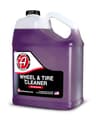
- A wheel cleaner is a detergent for shifting the loose brake dust and road film that accumulates week to week. Adam’s Wheel & Tire Cleaner is in this camp — our spec table records it as not iron-removing, which is exactly the distinction. Use it every wash.
- Products that do both exist and are convenient, but you pay decontaminant prices for maintenance cleaning. If you clean wheels weekly, own one of each.
For the wider wheel-cleaning question — which sprays lift brake dust without harming a rim finish — see best wheel cleaners, and pair whatever you use with a proper wheel brush.
What it will not fix
Managing expectations, because people occasionally buy these hoping for more.
An iron remover dissolves iron. It will not touch tar, tree sap, overspray or bug remains — those are organic or polymer contamination and need a bug and tar remover or clay. It will not remove swirl marks or scratches, which are physical damage to the clear coat and need machine correction. It will not remove etched water spots, because those are mineral, not ferrous. Where the two decontamination steps overlap, and which to do first, is set out in iron remover versus clay bar.
What it does do, better than anything else, is make paint feel smooth again without touching it — and on a coated car that contact-free quality is exactly why it is the right first step.