Swirl & Shine

Best Wheel Sealants and Ceramic Coatings for Wheels

A wheel is the only painted surface on your car with a brake rotor bolted behind it - and only two of these four makers publish a temperature figure at all. Four picks ranked on what each brand puts in writing, with honest cons on every one.

By Stephen V.Last updated How we rank

Wheels are the dirtiest part of a clean car and the part people protect last. That is backwards. Paint collects dust and rain; a wheel face collects hot iron particles fired off a spinning brake rotor, which land, embed and then rust in place. That is why a wheel goes from new to permanently dull faster than any panel on the car, and why a stronger wheel cleaner eventually stops being the answer. A sealant or coating on the wheel face gives the brake dust something sacrificial to land on, so most of it rinses instead of bonding.

Here is the problem with shopping this shelf. Every bottle says ceramic, every bottle says hydrophobic, and the one spec that actually distinguishes a wheel product from a paint product — heat— is published by almost nobody. So that is what we rank on: first what the maker publishes about temperature, then whether there is a durability figure you could hold them to, then how demanding the published application actually is. We have not tested these. Every figure below is the manufacturer’s own wording, read on the manufacturer’s own page and cited at the foot of the page.

How this is funded: we earn a commission if you buy through our links, at no extra cost to you. It never changes which product we recommend, and we’ll always tell you who should skip one. Full disclosure.

Quick picks

Ranked on published specs, paint safety and buyer fit. Select a row to jump to the full write-up. We have not tested these products — here is exactly what we do instead.

#ProductBest forPrice
1
Gtechniq C5 Wheel Armor (15 ml)

Gtechniq C5 Wheel Armor (15 ml)

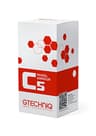
The only product here that publishes a temperature rating with a number behind it: Gtechniq states C5 "will retain its integrity up to temperatures of 600°C (1112°F)". That is the spec this category should be sold on and almost nobody prints. It is a genuine bonded coating with a published method — Panel Wipe first, no more than half a wheel at a time, buff within 30 to 60 seconds, then 12 hours indoors to cure — and it asks more of you than any spray on this page.

Best overall
$34.95 · View on Amazon

Price as of November 22, 2026. #ad How we’re funded

2
CarPro CQuartz DLUX Trim & Wheel Coating (30 ml)

CarPro CQuartz DLUX Trim & Wheel Coating (30 ml)

One bottle that coats the wheels and the faded black plastic in the same afternoon, with the highest published heat claim on the page — CarPro says it withstands "temperatures up to 1000°F" and protects "for up to two years or more". It is also the most method-dependent product here: the published wipe-off window moves with air temperature, from one minute at 90°F out to eight minutes at 50°F, and matte wheels follow a different step again.

Best for wheels and trim together
$42.99 · View on Amazon

Price as of November 22, 2026. #ad How we’re funded

3
CERAKOTE Rapid Ceramic Wheel Sealant (14 oz spray)

CERAKOTE Rapid Ceramic Wheel Sealant (14 oz spray)

The one on this page that asks nothing of you. Cerakote's published method is five words — "Simply spray it on, buff it off" — with no prep chemical, no timed wipe-off window and no cure period, and the page says it can go "over your existing ceramic coating". The trade is total: Cerakote publishes no duration and no temperature figure for it anywhere, so you are buying ease and a big bottle rather than a protection claim.

Best with no process at all
$13.56 · View on Amazon

$15.9515% off

Price as of November 22, 2026. #ad How we’re funded

4
Chemical Guys Wheel Guard & Rim Wax (8 oz)

Chemical Guys Wheel Guard & Rim Wax (8 oz)

A wax for wheels, and the page is honest enough to say so: Chemical Guys calls it "a specialty synthetic wax developed just for wheels and brake components" built on "a full-synthetic acrylic formula". It is the cheapest way to put a sacrificial layer between brake dust and a rim finish, and the one you can strip and redo without consequence. What it does not do is publish a number — the durability heading on its own page reads "Months Of Durable Protection" with nothing underneath it.

Best cheap sacrificial layer
$20.99 · View on Amazon

Price as of November 22, 2026. #ad How we’re funded

The picks in full

#1Best overall

Gtechniq C5 Wheel Armor (15 ml)

The only product here that publishes a temperature rating with a number behind it: Gtechniq states C5 "will retain its integrity up to temperatures of 600°C (1112°F)". That is the spec this category should be sold on and almost nobody prints. It is a genuine bonded coating with a published method — Panel Wipe first, no more than half a wheel at a time, buff within 30 to 60 seconds, then 12 hours indoors to cure — and it asks more of you than any spray on this page.

Strengths

  • Only pick here with a published temperature figure: "will retain its integrity up to temperatures of 600°C (1112°F)"
  • Published application method is specific enough to follow: Panel Wipe the dry wheel, load the applicator, spread no more than half a wheel at a time, buff off within 30 to 60 seconds
  • Maker publishes a real coverage figure per size — 15 ml for outer rim faces up to 17 inches, 30 ml for inner and outer faces up to 20 inches
  • Listed as suitable for gloss, satin and matte rim finishes and for chrome

Trade-offs

  • Gtechniq's own pages disagree on how long it lasts: the product page says up to two years, the wheel-coating kit page says up to 18 months, and the maker's own how-to article says around 12 months
  • The 15 ml bottle covers outer rim faces only, up to 17 inches — inner barrels need the 30 ml
  • Published cure is 12 hours indoors before the wheels see weather, which rules out a driveway job before a rainy night
  • Maker states it is not for polished metals, and publishes a 3-month shelf life once opened

Who should skip it. Skip it if your wheels get washed when you remember and you want this done in ten minutes. The published method has a prep step, a 30-to-60-second buff window per half-wheel and a 12-hour indoor cure, and a bottle you must use within three months of opening. If that is more process than the job is worth to you, the Cerakote spray is honest about being the opposite of this.

TypeBonded wheel coating
Durability (mfr claim)Maker's own pages give up to 2 years, up to 18 months and around 12 months
Heat resistanceRetains integrity up to 600 C / 1112 F (per maker)
Size15 ml (0.5 fl oz) bottle (per listing)
CoverageOuter rim faces, wheels up to 17 in; the 30 ml does inner and outer up to 20 in (per maker)
PrepWheel cleaner, iron remover, then Panel Wipe on the dry wheel (per maker)
ApplicationHalf a wheel at a time, buff off within 30-60 seconds (per maker)
Cure12 hours indoors before exposure to the elements (per maker)
FinishesGloss, satin and matte rims and chrome; not polished metals (per maker)
Shelf life3 months once opened, 12 months unopened (per maker)
WarrantyNot published

Specs read from the product listing, on October 25, 2026. “Not published” means the maker doesn’t state that figure.

#2Best for wheels and trim together

CarPro CQuartz DLUX Trim & Wheel Coating (30 ml)

One bottle that coats the wheels and the faded black plastic in the same afternoon, with the highest published heat claim on the page — CarPro says it withstands "temperatures up to 1000°F" and protects "for up to two years or more". It is also the most method-dependent product here: the published wipe-off window moves with air temperature, from one minute at 90°F out to eight minutes at 50°F, and matte wheels follow a different step again.

Strengths

  • Highest published heat claim here: "Withstanding temperatures up to 1000°F"
  • Published durability of "up to two years or more", plus a published coverage figure — "Approximately 10ml provides complete coverage for one vehicle", so a 30 ml bottle is roughly three cars
  • Does double duty on "plastic, rubber, metal, and various wheel finishes", which is why detailers buy it for trim as much as for rims
  • Publishes wipe-off times as a temperature range rather than one number, which is more useful than a single figure

Trade-offs

  • The wipe-off window is the whole risk: "let cure 1 minute at 90F up to 8 minutes at 50F" on painted or chrome wheels, and a separate 1-minute flash on matte — miss it and you are left with high spots
  • Prep needs CarPro Eraser specifically, plus IronX decontamination, and on plastic a 20-minute evaporation wait, so there is a shopping list before you start
  • Maker warns in writing to "use DLUX ceramic coatings at your own risk" on brand-new textured plastic
  • Published post-application rules are restrictive: 1-3 hours with no water, water wiped off before it dries during the first 24 hours, no washing for 3 days. No warranty is published

Who should skip it. Skip it if wheels are the only thing you want to coat and you are nervous about timed wipe-offs. You would be paying for trim capability you will not use, and the Gtechniq publishes a longer buff window per section and a temperature figure of its own. Skip it too if your wheels are polished or you cannot machine-polish the finish, because the maker warns against putting any semi-permanent coating on something you cannot correct.

TypeBonded coating for wheels, trim, rubber and metal
Durability (mfr claim)Up to two years or more (per maker)
Heat resistanceWithstands temperatures up to 1000 F (per maker)
Size30 ml (per listing)
CoverageApproximately 10 ml per vehicle (per maker)
PrepWash, IronX decontamination, CarPro Eraser wipe-down; plastic needs 20 min to evaporate (per maker)
Wipe-off windowPainted/chrome 1 min at 90 F up to 8 min at 50 F; matte flashes 1 min at 90 F (per maker)
After application1-3 hours no water, no washing for 3 days (per maker)
FinishesPainted, chrome and matte wheels; never polish a matte surface (per maker)
Shelf lifeInstall within 12 months of purchase (per maker)
WarrantyNot published

Specs read from the product listing, on October 25, 2026. “Not published” means the maker doesn’t state that figure.

#3Best with no process at all

CERAKOTE Rapid Ceramic Wheel Sealant (14 oz spray)

The one on this page that asks nothing of you. Cerakote's published method is five words — "Simply spray it on, buff it off" — with no prep chemical, no timed wipe-off window and no cure period, and the page says it can go "over your existing ceramic coating". The trade is total: Cerakote publishes no duration and no temperature figure for it anywhere, so you are buying ease and a big bottle rather than a protection claim.

Strengths

  • Published method is a single step: "Simply spray it on, buff it off" — no prep chemical, no timed window, no cure
  • Listed for "painted, powder coated, polished, or chrome wheels", the widest finish list here and the only one that includes polished
  • Maker states you can "apply it over your existing ceramic coating to boost both shine and performance", so it works as a top-up as well as a standalone
  • A 14 oz spray bottle is far more product than the 15 ml and 30 ml coatings, which makes re-doing it every few months painless

Trade-offs

  • No durability figure published anywhere — the strongest claim on the maker's page is "an ultra-durable, hydrophobic barrier", with no washes, months or years attached
  • No temperature or heat figure published, on a product sold for the one surface with a brake rotor behind it
  • No coverage figure published, so how many sets of wheels a bottle treats is unstated
  • A spray sealant is not a bonded coating whatever the name suggests; expect to reapply on the schedule a wax keeps rather than an annual one

Who should skip it. Skip it if you want a number you can hold the maker to. Cerakote publishes a guaranteed wash count for its trim coat and a lifetime guarantee on its headlight kit, and publishes nothing at all for this one — which tells you where it sits in its own range. If you want published durability, the Gtechniq and the CarPro both give you one.

TypeSpray-on wheel sealant
Durability (mfr claim)Not published
Heat resistanceNot published
Size14 oz spray (per listing)
CoverageNot published
PrepNone published beyond a clean, dry wheel
Application"Simply spray it on, buff it off" (per maker)
CureNot published
FinishesPainted, powder coated, polished or chrome wheels (per maker)
Over a coatingMaker states it can be applied over an existing ceramic coating
WarrantyNot published

Specs read from the product listing, on October 25, 2026. “Not published” means the maker doesn’t state that figure.

#4Best cheap sacrificial layer

Chemical Guys Wheel Guard & Rim Wax (8 oz)

A wax for wheels, and the page is honest enough to say so: Chemical Guys calls it "a specialty synthetic wax developed just for wheels and brake components" built on "a full-synthetic acrylic formula". It is the cheapest way to put a sacrificial layer between brake dust and a rim finish, and the one you can strip and redo without consequence. What it does not do is publish a number — the durability heading on its own page reads "Months Of Durable Protection" with nothing underneath it.

Strengths

  • Cheapest route to protection here, and a wax rather than a coating means a mistake washes off instead of needing correction
  • Maker describes it as bonding "into the pores of painted and polished metal surfaces", and claims protection from "brake dust, grime, dirt, mud, and water"
  • Also claims it fills minor imperfections to add gloss, which is the one thing a bonded coating will not do for an older wheel
  • An 8 oz tub is a lot of product for the money, which suits a wax you reapply rather than a coating you cure

Trade-offs

  • No duration published at all: the page's own heading is "Months Of Durable Protection" with no figure, while the brand's Max Coat sealant on the same site publishes "up to 8 full months"
  • No heat resistance figure published, and no application directions — the "How to Use" section on the maker's page is empty
  • Applicable finishes are published only as "Stainless Steel, Metal, Aluminum", with no statement about matte or powder-coated rims
  • The maker's page carries a California Proposition 65 warning stating the product "can expose you to chemicals including formaldehyde"

Who should skip it. Skip it if you were hoping for annual protection. This is a wax, the maker publishes no duration for it, and brake dust is a hotter and more aggressive contaminant than anything a paint wax deals with. Skip it too if your wheels are matte or powder coated, because the published finish list does not name them and the page gives no directions to follow.

TypeFull-synthetic acrylic wax for wheels (per maker)
Durability (mfr claim)"Months Of Durable Protection"; no figure published
Heat resistanceNot published
Size8 oz (per listing)
CoverageNot published
PrepNot published
ApplicationNot published; the maker's "How to Use" section is empty
CureNot published
FinishesStainless steel, metal, aluminum (per maker)
Prop 65Warning naming formaldehyde (per maker)
WarrantyNot published

Specs read from the product listing, on October 25, 2026. “Not published” means the maker doesn’t state that figure.

How to choose a wheel sealant

Four questions, in this order. The first one eliminates most of the shelf, and the second one explains why this category is so hard to shop honestly.

1. Is it a coating, a sealant, or a wax? They are three products

The names are used interchangeably in marketing and they should not be. A bonded coating is a liquid you wipe on, level within a published window and then cure — it cross-links into the wheel finish and is meant to last a season or more. Gtechniq C5 and CarPro DLUX are both this kind of product, and both ask for prep, timing and patience in exchange. A spray sealant like the Cerakote is a synthetic layer you spray and buff; no prep, no window, and a much shorter life. A wax — which is what Chemical Guys Wheel Guard actually is, by its own description — is a sacrificial film that you expect to replace.

None of those is the wrong answer. The wrong answer is paying coating money and getting wax behavior, or buying a coating when what you wanted was a ten-minute job. Work out which of the three you are shopping for before you compare prices, because across those three categories price is not comparing like with like.

What you wantType to buyPick
To do this once a year and forget itBonded coating, published heat ratingGtechniq C5 Wheel Armor
To coat the wheels and the faded trim in one goDual-purpose bonded coatingCarPro CQuartz DLUX
Protection on the wheels this afternoonSpray-on sealant, no cureCerakote Rapid Ceramic Wheel Sealant
The cheapest layer between dust and the finishSynthetic wheel waxChemical Guys Wheel Guard & Rim Wax

2. Does the maker publish a temperature figure?

This is the question that separates a real wheel product from a paint product with “wheels” added to the label, and it is the reason this page exists. The brake rotor behind your wheel runs far hotter than any painted panel ever gets. A protective layer that softens or breaks down at those temperatures is not protecting the hottest part of the surface, which is exactly the part taking the worst of the iron.

Two of our four publish a number. Gtechniq states that C5 “will retain its integrity up to temperatures of 600°C (1112°F)”. CarPro states DLUX withstands “temperatures up to 1000°F”. The other two publish nothing at all: Cerakote’s wheel sealant page has no temperature claim anywhere on it, and the closest Chemical Guys gets is on a different product — its Max Coat sealant is “designed to withstand high heat braking conditions”, a sentence with no number in it.

We are not going to pretend those two published figures are test results we verified, and we would not rank a 1000°F claim above a 600°C claim on the strength of the digits (600°C is 1112°F — the Gtechniq figure is the higher of the two once you convert it). What matters is the difference between a brand that commits to a number and a brand that does not. If those two are your shortlist, our Gtechniq C5 vs CarPro DLUX head-to-head puts every published claim side by side, including the application windows.

3. Is there a durability figure you could hold them to?

Here the category gets worse, and the most interesting finding on this page is that the best product has the messiest paperwork. Gtechniq publishes three different durability figures for the same bottle: the product page says up to two years, the Wheel Coating Kit page says up to 18 months, and Gtechniq’s own wheel-cleaning how-to article says one application lasts around 12 months. All three are the manufacturer’s own words. We quote the lowest of them when we plan a reapplication, because that is the only honest way to use a range a brand did not intend to publish.

CarPro is cleaner: “up to two years or more”. The other two publish no duration at all. Cerakote’s strongest wording is “an ultra-durable, hydrophobic barrier”, and Chemical Guys’ wax page has an entire section headed “Months Of Durable Protection” with no figure underneath it. The same company publishes “up to 8 full months” for its Max Coat sealant one shelf over, so the silence on the wax page is a choice, not an oversight.

PickPublished heat figurePublished durability
Gtechniq C5 Wheel Armor600°C / 1112°F2 years, 18 months and ~12 months (maker’s own, three pages)
CarPro CQuartz DLUX1000°F“Up to two years or more”
Cerakote Rapid Ceramic Wheel SealantNot publishedNot published
Chemical Guys Wheel Guard & Rim WaxNot publishedNot published (heading only)

Two “not published” columns on half the page is not us failing to find the number. It is the finding. If you want a figure you can plan around, there are two products here that give you one.

4. How much process does the published method demand?

This is where buyers get burned, because the demanding products are the good ones. Gtechniq’s published method is a clean wheel, an iron remover, a Panel Wipe, then no more than half a wheel at a time, buffed off within 30 to 60 seconds, then 12 hours indoors before the wheels see weather. CarPro’s is a wash, an IronX decontamination, a CarPro Eraser wipe-down, then a wipe-off window that moves with the air temperature — “1 minute at 90F up to 8 minutes at 50F” on painted or chrome, and a separate one-minute flash on matte.

Cerakote’s entire published method, by contrast, is “Simply spray it on, buff it off”. That is not a worse product category, it is a different trade: you give up the durability claim and you get your Saturday back. Be honest with yourself about which trade you want before you buy, because a coating applied badly looks worse than a wax applied well.

Three things nobody on this shelf publishes

Worth knowing before you buy, because the gaps are consistent across all four brands:

  • No warranty. Not one of these four products publishes a warranty term. Cerakote offers a guaranteed wash count on its trim coat and a lifetime guarantee on its headlight kit, and publishes neither on its wheel sealant.
  • No coverage figure on two of four. Gtechniq and CarPro both publish one (15 ml does outer rim faces up to 17 inches; approximately 10 ml does a vehicle). Cerakote and Chemical Guys publish nothing, so how many sets of wheels you get is unstated.
  • No ingredient disclosure, but two Prop 65 warnings. Chemical Guys prints a California Proposition 65 warning naming formaldehyde on the Wheel Guard wax page and one naming diethanolamine on its Max Coat sealant page. That is more chemical information than any of the other three brands give you, and it is a reason to wear gloves rather than a reason to avoid the product.

How to actually apply one of these

Whichever you buy, the prep decides the result. A coating bonds to whatever is on the wheel, and what is on a used wheel is embedded iron, old dressing overspray and road film. Coat over that and you have coated the contamination.

  1. Wash the wheels first, properly. Use a dedicated wheel cleaner and a brush that reaches the barrel. Gtechniq’s own sequence begins with a wheel cleaner for exactly this reason.
  2. Decontaminate the iron.This is the step people skip and the one that matters most on a wheel. Both Gtechniq and CarPro publish an iron remover in their prep sequence — see iron removers and why iron needs chemistry, not a clay bar.
  3. Dry completely, then wipe with the maker’s prep solvent. Gtechniq names Panel Wipe; CarPro names Eraser. The point of both is to strip any residue so the coating touches bare finish. A spray sealant does not need this step — which is part of why it does not last as long.
  4. Work small and watch the clock. Half a wheel at a time for the Gtechniq, with a 30-to-60-second buff. For the CarPro, time the wipe-off to the air temperature rather than to a habit.
  5. Respect the cure.Gtechniq publishes 12 hours indoors. CarPro publishes 1–3 hours with no water and no washing for three days. If the car has to sit outside tonight, do this another day.

Does a wheel coating actually reduce brake dust?

It does not reduce how much dust your brakes make — that is a function of the pad compound, not the wheel finish. What it changes is whether the dust sticks. Hot iron particles landing on bare, porous, microscopically rough wheel finish embed and begin to corrode in place; the same particles landing on a slick hydrophobic layer are far more likely to come off with a rinse and a mild soap. Chemical Guys puts a number on that effect for its sealant — “reducing brake dust contamination by up to 75%” — which we quote as the maker’s claim, not as a measured result.

The practical consequence is that a coated wheel changes your routine rather than eliminating it. You still wash the wheels. You just stop needing the aggressive acid-style cleaner to do it, which is good news for the finish underneath.

Our verdict

Buy the Gtechniq C5 Wheel Armor if you want this done properly: it is the only product here with a published temperature figure and a published, followable method, and the 600°C claim is the single most relevant spec in the category. Accept the two real costs — the 15 ml bottle does outer faces only up to 17 inches, and the brand cannot keep its own durability story straight across three pages.

Buy the CarPro CQuartz DLUX if your car also has faded black plastic, because one 30 ml bottle covers roughly three vehicles’ worth of both jobs and it publishes the longest clean durability claim here. Only buy it if you are comfortable timing a wipe-off to the thermometer. If the trim is the bigger problem and the wheels are fine, the two dedicated trim products people actually choose between are compared in Cerakote Trim Coat vs Solution Finish.

Buy the Cerakote Rapid Ceramic Wheel Sealant if what is actually stopping you is the process. “Spray it on, buff it off” on clean wheels today beats a bonded coating you keep meaning to apply, and it layers over an existing coating as a top-up. Just do not believe it is equivalent protection, because its maker never claims that it is.

And buy the Chemical Guys Wheel Guard & Rim Wax if you want the cheapest honest sacrificial layer and you are happy redoing it. It is a wax, it says so, and a wax on a wheel is still vastly better than nothing on a wheel — with the caveat that the maker publishes no duration, no heat figure and no directions at all.
Frequently asked questions

How long does a wheel sealant or wheel coating last?

It depends entirely on which of the three product types you buy, and only two of our four picks publish a figure. CarPro says DLUX protects "for up to two years or more". Gtechniq publishes three different numbers for C5 across its own pages - up to two years on the product page, up to 18 months on the wheel-coating kit page, and around 12 months in its own wheel-cleaning article - so we plan around the lowest. Cerakote publishes no duration for its wheel sealant at all, and Chemical Guys' Wheel Guard wax page has a section headed "Months Of Durable Protection" with no figure under it. None of those is a tested result or a warranty.

Is a ceramic coating for wheels worth it?

If your wheels are new or recently decontaminated, yes - a coated wheel face sheds hot iron particles that would otherwise embed and corrode in place, which is the mechanism that permanently dulls a wheel finish. The payoff is less in the wash itself than in what you stop needing: a coated wheel usually comes clean with a mild soap rather than a strong acid-style cleaner. If your wheels are already pitted and stained, the coating will seal that appearance in, so correct the finish first or accept the current look.

Can I use a regular paint ceramic coating on my wheels?

Many paint coatings list wheels among their surfaces and will physically go on. The reason we rank dedicated wheel products first is heat: the brake rotor behind the wheel runs far hotter than any painted panel, and a paint coating's published claims are made for a panel. Of our four picks, Gtechniq publishes 600C / 1112F and CarPro publishes 1000F; a typical paint coating publishes no temperature figure at all. If the product you own does not state one, use it on paint and buy something for the wheels.

What is the difference between a wheel sealant and a wheel coating?

A coating cross-links into the wheel finish and cures, which is why Gtechniq publishes a 12-hour indoor cure and CarPro publishes 1-3 hours with no water and no washing for three days. A sealant is a synthetic layer that sits on top - Cerakote's published method for its wheel sealant is the whole of "Simply spray it on, buff it off", with no cure period published. Coatings last longer and demand prep, timing and a cure window; sealants take ten minutes and come back off sooner. Chemical Guys Wheel Guard is a third thing again: by its own description a "full-synthetic acrylic" wax.

Do I need to decontaminate wheels before coating them?

Yes, and iron decontamination specifically - not just a wash. Brake dust is embedded metal, and a coating applied over it bonds to the contamination rather than to the wheel. Gtechniq's published sequence is a dedicated wheel cleaner, then an iron remover, then a Panel Wipe on the dry wheel. CarPro's is a wash, IronX, then a wipe-down with CarPro Eraser. In practice: clean the wheels, spray an iron remover and let it do its color-change thing, rinse, dry completely, then wipe with the maker's prep solvent before you open the coating.

Can I apply a wheel coating on matte or powder-coated wheels?

Check the published finish list, because it varies and it matters. Gtechniq lists C5 as suitable for gloss, satin and matte rims and for chrome, but states it is not for polished metals. Cerakote lists "painted, powder coated, polished, or chrome wheels" - the widest list here and the only one that includes polished. CarPro covers matte but with a different flash step and an explicit warning never to polish a matte surface, plus advice against putting any semi-permanent coating on a finish you cannot correct. Chemical Guys publishes only "Stainless Steel, Metal, Aluminum" and does not name matte or powder coat at all.

Will a wheel coating stop brake dust?

No - it cannot change how much dust your brakes produce, which is down to the pad compound. What it changes is whether that dust sticks. On a slick, hydrophobic layer, most of it rinses off; on bare wheel finish, hot iron particles embed and start to corrode. Chemical Guys claims its Max Coat sealant reduces "brake dust contamination by up to 75%", which is the maker's figure rather than a measured one. Expect an easier wash, not no wash.

How often should I reapply a wheel sealant?

Let the water tell you rather than the calendar. When the wheel stops beading and starts holding a dull film that a mild soap will not shift, the layer is spent. As planning numbers: treat a wax like Wheel Guard as a few-months product since its maker publishes no figure at all, treat a spray sealant as a top-up you refresh at roughly the same cadence as a ceramic spray on paint, and treat the two bonded coatings as annual - using the lowest figure the maker publishes rather than the highest.

Can I put a wheel sealant on brake calipers?

Gtechniq's own listing for C5 describes it as protecting "alloy rims and brake calipers", and Chemical Guys describes Wheel Guard as developed "just for wheels and brake components", so both makers name caliper use themselves. A caliper is the hottest thing you can coat on a car, so the published heat figure matters even more there than on the rim face - which, on this page, means Gtechniq or CarPro rather than the two products that publish no temperature claim at all. Never let any of these products contact the rotor friction surface or the pads.

Sources

  • Gtechniq — C5 Wheel Armour — The only published temperature figure in the wheel-protection category, and a brand contradicting itself on durability. Heat: C5 "will retain its integrity up to temperatures of 600°C (1112°F)". Durability: the product page says protection for up to two years, the Wheel Coating Kit page says up to 18 months on the wheel face and inner barrel with proper care, and Gtechniq's own "How to clean your wheels properly" article says one application lasts around 12 months — three figures, all the maker's own. Method published: start with clean, dry wheels, wipe each wheel with Panel Wipe before coating for the best bond (the wheel FAQ adds a dedicated wheel cleaner then an iron remover first), shake the bottle, wear gloves, load the AP1 applicator with a few drops, spread across no more than half a wheel at a time, buff off the residue within 30 to 60 seconds with an MF1 cloth. Coverage: the 15 ml covers outer rim faces on wheels up to 17 inches, the 30 ml covers inner and outer faces on wheels up to 20 inches. Cure: keep the wheels indoors for 12 hours before exposing them to the elements. Finishes: suitable for gloss, satin and matte rims and for chrome, but not polished metals. Shelf life: use within 3 months of opening, 12 months unopened. No warranty term is published. Cited to Gtechniq's own UK site because gtechniq.com returns 403 to automated reads; the claims are the same brand's (accessed October 25, 2026)
  • CarPro — CQUARTZ DLUX Trim & Wheel Coating 30ml — The highest published heat claim of the four wheel products and the most method-dependent application. Published: protection "protecting your vehicle's trim and wheels for up to two years or more"; "Withstanding temperatures up to 1000°F"; surfaces "including plastic, rubber, metal, and various wheel finishes"; coverage of "Approximately 10ml provides complete coverage for one vehicle". Wipe-off windows are published as temperature ranges rather than single numbers — on painted or chrome wheels "let cure 1 minute at 90F up to 8 minutes at 50F" then wipe off in a circular motion, while matte wheels "Let flash 1minute at 90F" with no figure given for lower temperatures. Prep on plastic is "Wipe surface with CARPRO Eraser, wipe dry, and then allow plastic to evaporate 20 minutes before applying"; wheels are washed, decontaminated with IronX, polished as needed (never on matte) and wiped with Eraser. Post-application: "Allow the CARPRO DLUX coating to cure 1-3 hours without water being introduced to surface", "If wet during first 24 hours wipe off water before it dries on surface as a precaution", and "After 3 days you are free to wash as needed". Cautions the maker prints itself: on brand-new textured plastic, "use DLUX ceramic coatings at your own risk"; and "NEVER polish a matte surface", with advice against any semi-permanent coating on a finish you cannot polish. Shelf life "should be installed within 12 months of purchase". No warranty is published (accessed October 25, 2026)
  • CERAKOTE — Rapid Ceramic Wheel Sealant (14 oz), AH-RCWHL14 — The complete published claim set for the easiest product in the category, which is notable mostly for what is missing. Method: "Simply spray it on, buff it off" and "One simple application is all you need" — no prep chemical, no timed wipe-off window and no cure period are published. Finishes: "Whether you have painted, powder coated, polished, or chrome wheels". Layering: the maker states you can "apply it over your existing ceramic coating to boost both shine and performance". The strongest durability wording on the page is "create an ultra-durable, hydrophobic barrier" — no wash count, no months, no years. No temperature or heat figure, no coverage figure, no cure time and no guarantee are published anywhere on the page, which is the opposite of the same brand's trim coat (a guaranteed 200 washes) and headlight kit (guaranteed for as long as you own the vehicle). Cited to Cerakote's own European site because cerakote.com returns 403 to automated reads; the claims are the same brand's (accessed October 25, 2026)
  • Chemical Guys — Wheel Guard and Rim Wax (WAC315) — A wax sold for wheels, with a durability heading and no durability number. Published: "Wheel Guard is a specialty synthetic wax developed just for wheels and brake components", built on "a full-synthetic acrylic formula"; it bonds "into the pores of painted and polished metal surfaces"; it claims protection from "brake dust, grime, dirt, mud, and water" and that it fills minor imperfections to add gloss. Applicable Finishes are listed as "Stainless Steel, Metal, Aluminum" — matte and powder-coated rims are not named. The durability section is headed "Months Of Durable Protection" with no figure underneath it, and no heat resistance figure, no coverage figure, no size list, no buff or cure time and no warranty are published. The "How to Use" section on the page is empty. The page carries a California Proposition 65 warning stating the product "can expose you to chemicals including formaldehyde" (accessed October 25, 2026)
  • Chemical Guys — Wheel Guard Max Coat Wheel and Rim Sealant (WAC_303) — The same brand's sealant, cited here for the contrast with its own wax: this page publishes a figure where the wax page publishes none. Published claims: it "lasts up to 8 full months of protection with just one application", it reduces "brake dust contamination by up to 75%", and it is "Designed to withstand high heat braking conditions" — wording with no temperature number attached. Applicable Finishes are again "Stainless Steel, Metal, Aluminum". No chemistry is named, no sizes, no coverage figure, no application directions (the "How to Use" heading has no content beneath it), no cure or buff time and no warranty are published. The page carries a California Proposition 65 warning stating the product "can expose you to chemicals including Diethanolamine" (accessed October 25, 2026)

Keep reading