Swirl & Shine

Best Products for Oxidized and Faded Car Paint

Oxidation is not a scratch, and the product that fixes one is often the wrong tool for the other. Five picks ranked on whole-panel work: what cuts dead clear coat back, what finishes it, and what stops it coming back.

By Stephen V.Last updated How we rank

Buy Meguiar’s Ultimate Compound. It is the only product in our registry whose maker names your actual problem: the listing states it is made for scratches, swirls, oxidation and water spots, and it publishes an alumina micro-abrasive and application by hand or dual-action polisher. On a faded car that matters twice over, because oxidation is the one defect that covers whole panels rather than sitting in a spot, and a product you can start on by hand lets you test a door before committing to a machine. It is also the cheapest product on this page, which makes it the budget pick and the overall pick at the same time— unusual, and worth saying plainly.

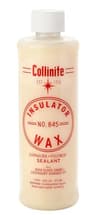
If the whole car is going to be done in one weekend, 3D ONE Hybrid Compound & Polishis the one to graduate to: its cut is set by the pad and machine rather than by the bottle, and the maker states it is designed to minimize dusting — which sounds like a detail until you have covered a hood, a roof and two doors in compound dust. And whatever you cut with, the job is not finished until it is protected: Collinite No. 845 is here because unprotected clear coat is what oxidized in the first place.

Prices come from our live price layer and were last verified as of November 23, 2026. We have not tested any of these products on faded paint or on any other kind. This ranking is published specs and maker-stated defect lists read against the specific way oxidation differs from a scratch, and nothing here claims a result we produced.

How this is funded: we earn a commission if you buy through our links, at no extra cost to you. It never changes which product we recommend, and we’ll always tell you who should skip one. Full disclosure.

Quick picks

Ranked on published specs, paint safety and buyer fit. Select a row to jump to the full write-up. We have not tested these products — here is exactly what we do instead.

#ProductBest forPrice
1
Meguiar's Ultimate Compound (G17216, 15.2 oz)

Meguiar's Ultimate Compound (G17216, 15.2 oz)

The bottle to reach for when the swirls are more than a haze. Meguiar's sells it for scratches, swirls, oxidation and water spots, and — importantly for most buyers — rates it for use by hand or with a dual-action polisher. It is also one of the lowest-priced bottles here, which makes it the sensible next step if a light polish did not get there.

Best overall and the budget pick
$13.97 · View on Amazon

Price as of November 23, 2026. #ad How we’re funded

2
3D ONE Hybrid Compound & Polish (16 oz)

3D ONE Hybrid Compound & Polish (16 oz)

The most adaptable bottle here, because its cut is set by the pad and machine rather than the product. 3D sells it for a rotary polisher when you want aggressive cutting and a dual-action polisher with a softer pad when you want a fine finish, and says it handles anything from light scratches to more significant swirls. It is also designed to minimize dusting, which matters more than it sounds on a whole-car job.

Best for a whole car in one go
$31.99 · View on Amazon

Price as of November 23, 2026. #ad How we’re funded

3
Chemical Guys TORQX Random Orbital Polisher Kit

Chemical Guys TORQX Random Orbital Polisher Kit

The one box that contains an actual paint correction. Chemical Guys publishes an "800-watt motor & 9mm dual-action orbital throw" and itemizes the kit: the polisher plus V32, V34, V36 and V38 — heavy cut through finishing polish — and orange, white and black Hex-Logic pads to carry them. For a first-timer that matters more than any spec, because the alternative is guessing which compound and which pad to pair.

Best machine to do it with
$161.24 · View on Amazon

$214.9925% off

Price as of November 23, 2026. #ad How we’re funded

4
Griot's Garage BOSS Perfecting Cream (B130, 16 oz)

Griot's Garage BOSS Perfecting Cream (B130, 16 oz)

The finishing step, and the most refined of the five. It is the lightest cream in Griot's three-step BOSS line — the maker's chart places it after Fast Correcting and Correcting, for "fine defect removal such as swirl marks and DA haze" — and it is rated for hand use as well as Griot's orbital polishers. Buy it to follow a compound, or on its own when the damage is a fine haze on otherwise good paint.

Best finishing step
$19.99 · View on Amazon

Price as of November 23, 2026. #ad How we’re funded

5
Collinite No. 845 Insulator Wax (16 oz)

Collinite No. 845 Insulator Wax (16 oz)

The durability pick, and an enthusiast cult favorite for good reason. It's a carnauba-plus-polymer liquid that the maker sells on longevity and hydrophobics rather than shine alone — the one to use if you want to wax in autumn and still see beading in late winter.

Best protection afterwards
$17.57 · View on Amazon

$20.9516% off

Price as of November 23, 2026. #ad How we’re funded

The picks in full

#1Best overall and the budget pick

Meguiar's Ultimate Compound (G17216, 15.2 oz)

The bottle to reach for when the swirls are more than a haze. Meguiar's sells it for scratches, swirls, oxidation and water spots, and — importantly for most buyers — rates it for use by hand or with a dual-action polisher. It is also one of the lowest-priced bottles here, which makes it the sensible next step if a light polish did not get there.

Strengths

  • Rated by Meguiar's for hand or DA polisher use, so no machine is required to start
  • Sold for scratches, swirls, oxidation and water spots — the broadest defect list in the roundup
  • One of the lowest-priced bottles here, which lowers the stakes on a first correction

Trade-offs

  • A compound removes more clear coat per pass than a polish — overkill on light haze, and the least-aggressive-first rule says try something milder first
  • Meguiar's says it finishes "without hazing", but compounds as a class can leave haze that a polish refines, so plan on a finishing step if dark paint looks cloudy afterwards
  • By hand, the ceiling is real — heavier defects are machine work, whatever the label allows

Who should skip it. Skip it if your swirls only show in direct sun. That is light marring, and a compound spends clear coat you did not need to spend — start with the M09 or the Griot's cream.

TypeCompound (per maker)
Size15.2 oz
ApplicationHand or DA polisher (per maker)
Made forScratches, swirls, oxidation, water spots (per maker)
AbrasiveAlumina micro-abrasive (per maker)
Filler-free claimNot published
Body shop safeNot published

Specs read from the product listing, on September 15, 2026. “Not published” means the maker doesn’t state that figure.

#2Best for a whole car in one go

3D ONE Hybrid Compound & Polish (16 oz)

The most adaptable bottle here, because its cut is set by the pad and machine rather than the product. 3D sells it for a rotary polisher when you want aggressive cutting and a dual-action polisher with a softer pad when you want a fine finish, and says it handles anything from light scratches to more significant swirls. It is also designed to minimize dusting, which matters more than it sounds on a whole-car job.

Strengths

  • Cut changes with the pad and machine, per the maker — one product covers a cutting pass and a finishing pass
  • Designed to minimize dusting, which keeps trim, glass and pads cleaner over a full car
  • Made in the USA, and sold in 8, 16 and 32 oz sizes

Trade-offs

  • 3D's own product page describes machine use only; hand use appears on its Amazon listing as spot-correcting
  • 3D does not publish its abrasive technology on its product page, and the filler-free claims you will see online come from resellers, not the maker
  • Sits at the premium end of this roundup on price

Who should skip it. Skip it if you are working by hand. Its whole advantage is that the pad and machine set the cut, and without a machine you are paying for flexibility you cannot use.

TypeHybrid compound and polish (per maker)
Size16 oz (also 8 and 32 oz)
ApplicationRotary or DA polisher (per maker); hand spot-correcting (per listing)
Made forLight scratches to more significant swirls (per maker)
AbrasiveNot published
Filler-free claimNot published
DustingDesigned to minimize dusting (per maker)

Specs read from the product listing, on September 15, 2026. “Not published” means the maker doesn’t state that figure.

#3Best machine to do it with

Chemical Guys TORQX Random Orbital Polisher Kit

The one box that contains an actual paint correction. Chemical Guys publishes an "800-watt motor & 9mm dual-action orbital throw" and itemizes the kit: the polisher plus V32, V34, V36 and V38 — heavy cut through finishing polish — and orange, white and black Hex-Logic pads to carry them. For a first-timer that matters more than any spec, because the alternative is guessing which compound and which pad to pair.

Strengths

  • Kit is itemized by the maker: polisher, V32, V34, V36 and V38, plus orange cutting, white polishing and black finishing Hex-Logic pads
  • Four-step compound ladder means you can start gentle and escalate only if the paint needs it — the safe way to learn
  • Published "9mm dual-action throw" with "variable-speed control for cutting, polishing, and finishing"
  • Maker states compatibility with 3in, 5in and 6in backing plates, so it can do a bumper corner and a hood with a plate swap

Trade-offs

  • No OPM figure published anywhere — "variable-speed control" is the only speed information the maker gives
  • Maker's own page is inconsistent about what is in the box: an image calls it 9 items including a backing plate, the itemized list shows 8 and no plate
  • Weight, cord length and warranty are all unpublished
  • Maker warns that "accessories or chemicals may be replaced based on stock availability", so the exact contents can vary

Who should skip it. Skip it if you already own compounds and pads, or if you want published numbers to compare. You would be paying a second time for chemicals you have, and on paper the Griot's gives you more watts and the only real speed range on this page for less money.

TypeRandom orbital (dual action) polisher kit
Orbit / throw9 mm (per maker)
Motor800 W (per maker)
Speed rangeVariable-speed control; no OPM figure published (per maker)
Backing plateCompatible with 3 in, 5 in and 6 in plates (per maker)
IncludedPolisher, V32 / V34 / V36 / V38 compounds and polishes, orange cutting, white polishing and black finishing Hex-Logic pads (per maker)
CordNot published
WeightNot published
WarrantyNot published

Specs read from the product listing, on October 18, 2026. “Not published” means the maker doesn’t state that figure.

#4Best finishing step

Griot's Garage BOSS Perfecting Cream (B130, 16 oz)

The finishing step, and the most refined of the five. It is the lightest cream in Griot's three-step BOSS line — the maker's chart places it after Fast Correcting and Correcting, for "fine defect removal such as swirl marks and DA haze" — and it is rated for hand use as well as Griot's orbital polishers. Buy it to follow a compound, or on its own when the damage is a fine haze on otherwise good paint.

Strengths

  • Maker-rated for hand use and orbital polishers, so it suits a first attempt and a machine follow-up alike
  • Positioned by Griot's specifically for fine swirl marks and the haze a heavier step leaves behind
  • Griot's Amazon listing states it contains no silicones or fillers and is body-shop safe

Trade-offs

  • The lightest cut in its own line — on moderate swirls it will be slow or simply not enough
  • The no-fillers statement is on the brand's Amazon listing, not on its own product page
  • Griot's ranks its cut only against its own BOSS creams, so it is hard to compare directly with other brands' polishes

Who should skip it. Skip it as your only bottle if your swirls are visible in ordinary daylight. It is built to refine, not to cut — pair it with a compound, or start with a one-step.

TypeFinishing polish (per maker)
Size16 oz
ApplicationHand or orbital polisher (per maker)
Made forFine swirl marks and DA haze (per maker)
AbrasiveSub-micron (per maker)
Filler-free claimYes (per listing)
Body shop safeYes (per listing)

Specs read from the product listing, on September 15, 2026. “Not published” means the maker doesn’t state that figure.

#5Best protection afterwards

Collinite No. 845 Insulator Wax (16 oz)

The durability pick, and an enthusiast cult favorite for good reason. It's a carnauba-plus-polymer liquid that the maker sells on longevity and hydrophobics rather than shine alone — the one to use if you want to wax in autumn and still see beading in late winter.

Strengths

  • Carnauba + polymer blend sold specifically on durability, not just gloss
  • Strongly hydrophobic, so water sheets off rather than sitting on paint
  • A little goes a very long way — thin coats are what it wants

Trade-offs

  • Unforgiving if applied thickly — a heavy coat is genuinely hard to buff off
  • A workmanlike, functional finish rather than the warmest carnauba glow

Who should skip it. Skip it if you like a thick, generous application technique — this is a thin-coat product and applying it the usual way turns removal into a workout.

Size16 oz
TypeCarnauba + polymer sealant
FormLiquid
HydrophobicYes (per listing)
DurabilityNot published

Specs read from the product listing, on August 11, 2026. “Not published” means the maker doesn’t state that figure.

Oxidation is a different defect, and that changes the shopping list

A scratch is damage in one place. Oxidation is the clear coat itself degrading across an entire panel from UV exposure, which is why a faded car looks chalky and flat rather than marked, why it is worst on the roof, the hood and the top of the trunk, and why it gets dramatically worse on a car that has lived outside without protection. On single-stage paint — older cars, and some work vehicles — the pigment itself dulls and a cutting pass pulls color onto the pad, which is the clearest sign you are dealing with oxidation rather than dirt.

That difference is why this page is not our scratch remover ranking with a new title. That page sorts on how deep a defect each bottle can reach, which is the right question for a mark you can point at. This one sorts on whole-panel work: coverage, how much dust a product throws over a long session, whether you can realistically do it by hand, and the protection step that decides whether you are back here in two years. Three of the five picks below appear on no other defect page on this site.

Before you buy anything: the test that saves you money

Wash the car, dry it, then look along a panel in direct sun. Then do one more thing — clay or chemically decontaminate a small section and look again. A startling share of “my paint has gone dull” cases are bonded road film and embedded iron sitting on perfectly good clear coat, and that comes off with chemistry rather than abrasives. Our iron remover and clay bar picks are both cheaper than anything on this page, and both are non-abrasive.

If the test section comes up smooth and still looks flat, it is oxidation, and abrasives are the answer. If it comes up smooth and glossy, you were never oxidized — buy protection and stop. Clear coat is finite: every correction removes some, and it does not grow back.

How we ranked these five

1. Does the maker actually name oxidation?

Only one does, and that decides the top slot. Meguiar’s publishes a defect list for Ultimate Compound covering scratches, swirls, oxidation and water spots, plus an alumina micro-abrasive and hand-or-machine application. Everything else here is a general-purpose cutting product that will work on oxidation without its maker saying so. Where a maker publishes nothing — 3D does not publish its abrasive technology, and the filler-free claims you will find for it online come from resellers rather than from 3D — we record it as unknown rather than filling the gap.

2. Can it cover a whole car without burying it in dust?

This criterion barely matters on a spot repair and matters enormously here. 3D ONE is explicitly designed to minimize dusting, which keeps trim, glass and your pads cleaner across a full car, and its cut changes with the pad and machine rather than the bottle — so one product covers the cutting pass and the finishing pass. The honest counterweight is on its own card: 3D describes machine use on its product page, with hand use appearing on the Amazon listing only as spot-correcting, and it sits at the premium end of this group on price.

3. Is a machine realistic, and which one?

For one faded panel, no. For a whole oxidized car, yes — hand application simply cannot sustain the pressure and coverage over that much area, and you will give up halfway through the roof. The Chemical Guys TORQX kit is the pick here rather than a bare machine because it is the only product in our registry where the maker itemises the pairings: the polisher plus V32, V34, V36 and V38 from heavy cut to finishing, with orange cutting, white polishing and black finishing pads to carry them, a published 9 mm throw and 800 W motor, and 3, 5 and 6 inch backing plate compatibility.

On a faded car that four-step ladder is worth more than peak power, because oxidation is uneven: the roof usually needs more cut than the doors, and having the whole range in one box means you escalate only where the paint demands it. Our polisher ranking for beginners makes the same argument at length, and the full polisher ranking compares the machines on published specs alone.

4. What refines the finish afterwards?

A cutting pass leaves its own haze, and on previously-oxidized paint that haze is the difference between “better” and “looks new”. Griot’s BOSS Perfecting Cream publishes a sub-micron abrasive, a filler-free claim and body-shop-safe status, and is made for fine swirl marks and dual-action haze specifically. The filler-free claim is the one that matters after a correction: a polish that fills defects flatters your work until the first few washes take the filler out.

5. What stops it happening again?

This is the step most faded-paint advice skips, and skipping it is why people do this job twice. Oxidation is UV damage to unprotected clear coat. Correcting it and then leaving the panel bare restarts the same clock on fresher, thinner paint. Collinite No. 845 publishes a carnauba-plus-polymer sealant in a 16 oz liquid and states it is hydrophobic; it publishes no durability figure, which we record rather than estimating, but it tops both our wax ranking and our winter ranking. A ceramic spray is the lower-effort alternative and is reapplied more often.

What this page will not fix

Clear coat failure. There is a point past oxidation where the clear coat has delaminated rather than dulled: it looks like peeling, cloudy patches with hard edges, usually on a roof or a hood, and often you can see the boundary where the clear has lifted. No compound repairs that — abrading a failing clear coat removes what is left of it and makes the patch bigger. That car needs a respray of the affected panels, and anybody selling you a bottle for it is selling you a disappointment.

It also will not fix faded plastic trim or cloudy headlights, both of which commonly arrive on the same sun-damaged car and neither of which is a paint job. Those are our trim restorer and headlight restoration rankings, and doing all three in one weekend is what makes an old car look genuinely different rather than merely clean.

The order to work in

Wash, chemically decontaminate, clay, then correct, then protect — and tape off trim before the machine comes out, because compound on textured plastic is far harder to remove than it is to prevent. Work a test section of roughly two feet square with the least aggressive pad and product combination you have, wipe the residue off and inspect it in direct light before you escalate. On an oxidized car the temptation is to start with the most aggressive combination everywhere; resist it, because the roof and the doors almost never need the same cut. The full sequence is in what order to detail a car, and compound vs polish explains which bottle is doing what at each stage.

One last honest note on expectations. A corrected, sealed, previously-oxidized panel looks dramatically better than it did and still will not look like new paint under every light, because some of what UV took is gone. What you are buying with the five products above is most of the way back, plus the protection that keeps it there.

Frequently asked questions

What is the best product for oxidized car paint?

Meguiar's Ultimate Compound, because it is the only product in our registry whose maker names oxidation in its published defect list, alongside scratches, swirls and water spots. It publishes an alumina micro-abrasive and states it can be applied by hand or with a dual-action polisher, so you can test one panel before committing to a machine. It is also the cheapest product on this page.

Can you fix oxidized paint by hand?

One panel, yes. A whole car, realistically no -- oxidation covers entire panels and hand application cannot sustain the pressure and coverage over that much area. Meguiar's publishes hand or machine use for Ultimate Compound, which makes it the right product to start a test panel with. If the test works and the whole car needs it, a dual-action polisher turns a lost weekend into an afternoon.

How do you tell oxidation from dirt or bonded contamination?

Decontaminate a test section and look again. Wash, dry, then clay or chemically decontaminate a small area. If it comes up smooth and glossy, the dullness was bonded road film and embedded iron, and you need no abrasives at all. If it comes up smooth and still looks flat and chalky, that is oxidation. On single-stage paint, a cutting pass pulling color onto the pad confirms it.

Will waxing fix faded paint?

No. Wax sits on top of the clear coat and can make dull paint look temporarily darker and wetter, but it removes nothing, so the fade is still there underneath and reappears as the wax goes. Protection belongs after correction, not instead of it -- and it genuinely matters there, because oxidation is UV damage to unprotected clear coat and a corrected panel left bare simply restarts the clock.

What if the clear coat is peeling rather than faded?

Then no product on this page helps, and that is worth knowing before you spend. Peeling, cloudy patches with hard edges are clear coat failure -- delamination rather than dullness -- and abrading a failing clear coat removes what is left and spreads the patch. Those panels need refinishing by a body shop. Fading is uniform and dull; failure has visible boundaries.

Sources

  • Meguiar's — Ultimate Compound (G17216) — The maker's positioning of its heavier consumer step: micro-abrasive technology that removes scratches, swirls, oxidation and water spots "without hazing on clear coats & all gloss paints", for use by hand or DA polisher (accessed September 15, 2026)
  • 3D — 3D ONE Hybrid Compound & Polish — The maker's hybrid positioning — "cuts through paint imperfections like a compound while finishing like a high-end polish" — with a rotary polisher for aggressive cutting or a DA with a softer pad for a fine finish, designed to minimize dusting (accessed September 15, 2026)
  • Chemical Guys — TORQX Random Orbital Polisher Kit — The kit contents that make this the one-box option, plus the maker's own inconsistency about them. Published: a "Powerful 800-watt motor & 9mm dual-action orbital throw", "Variable-speed control for cutting, polishing, and finishing", and compatibility with 3-inch, 5-inch and 6-inch backing plates. The itemized "What's in Your Kit" list gives the polisher plus "V32 Paint Correction Extreme Compound", "V34 Paint Correction Hybrid Compound", "V36 Paint Correction Cutting Polish", "V38 Paint Correction Finishing Polish", an "Orange Hex-Logic Medium-Heavy Cutting Pad", a "White Hex-Logic Light-Medium Polishing Pad" and a "Black Hex-Logic Finishing Pad" — eight items, while a product image describes a 9-item kit including a TORQ backing plate the list does not mention. The page also warns that "accessories or chemicals may be replaced based on stock availability". No OPM range, weight, cord length or warranty term is published (accessed October 18, 2026)
  • Griot's Garage — Polish & Compound education chart (BOSS creams) — Griot's own ordering of its BOSS creams from most to least aggressive — Fast Correcting for severe defects, Correcting for moderate to heavy, Perfecting for "fine defect removal such as swirl marks and DA haze" — with hand use listed alongside its orbital polishers (accessed September 15, 2026)
  • EDO Performance — Collinite Sale — The only Collinite discount we could find is a retailer's standing buy-two promotion ("we are offering 20% off!" on the lower-priced item), not a Black Friday event — we found no record of Collinite itself running a Black Friday sale (accessed September 14, 2026)

Keep reading