The four Turtle Wax products we carry, and what each one publishes
An alternatives page is only worth reading if it is specific about what is being replaced, so here is the field. Our registry carries four Hybrid Solutions products: the Ceramic Spray Coating (SiO2 ceramic, sprayed on damp and wiped off, hydrophobic gloss); the Ceramic Graphene Paste Wax in 5.5 oz (graphene and ceramic paste, hydrophobic per listing); the Ceramic 3-in-1 Detailer in 32 oz (applied dry to a towel or a 2 ft by 2 ft panel, stated by the maker to leave hybrid ceramic protection and water beading); and the Iron Remover & Wheel Cleaner in 23 oz (iron-removing, with a color-change indicator).
Three of the four carry “Not published” in their durability row. That is not a Turtle Wax failing — it is the whole category, and we say so on every spray page we publish. It does mean that nobody switching away from Turtle Wax can be switching for a longer stated life, because there is no stated life on either side of the swap to compare.
The three honest reasons to switch
1. You want volume and durability rather than a small jar
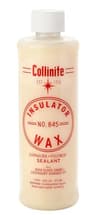
The Hybrid Solutions graphene paste is a 5.5 oz jar. Collinite No. 845 is a 16 oz liquid, and Chemical Guys Butter Wet Wax is 16 oz as well. If you wax two cars, or one car several times a year, the jar runs out while the bottles do not. That is the single most practical reason people shop away from a paste in this price band, and it has nothing to do with the chemistry being worse.
Collinite is the one we rank first here and on our car wax ranking, with a caveat stated on both pages: it rewards thin coats and punishes thick ones, so it is a marginally fussier product to apply than what you are leaving. If you do not want to learn a technique, take Butter Wet Wax instead and accept that you are trading staying power for an easier Saturday.
2. You want a protection step that does not need buffing
The Turtle Wax ceramic spray is applied to a damp car and wiped off. That is already easy, so the only real upgrade in effort is a product you do not wipe at all: Meguiar’s Hybrid Ceramic Wax is sprayed onto a wet car and rinsed off, with no towel on the paint at any point. On a dark car, where every wipe is a chance to install a fine scratch, that difference is worth more than it looks. It is an SiO2 hybrid and, like everything else here, publishes no durability figure.
Griot’s Garage Ceramic 3-in-1 Wax is the swap for the Turtle Wax 3-in-1 detailer and works the other way round: it goes on a dampcar as a drying aid, and its listing credits it with light cleaning as well as protection. Turtle Wax’s 3-in-1 is applied dry, to a towel or a small panel section. Neither approach is wrong; they fit different habits, and the drying-aid version attaches itself to a wash you were doing anyway. Both sit in our ceramic sprays under $25 ranking, where the Turtle Wax bottle is the budget pick.
3. You want a bigger bottle of the same idea
Gold Class paste is here for the buyer the other four picks do not serve: someone who likes a paste, likes a warm carnauba look on dark paint, and wants the cheapest wax on the page. It publishes a carnauba paste in 11 oz, no durability figure, and no statement about whether an applicator is included — which we print as unknown rather than assuming. It is the first wax we would hand anybody who has never waxed a car.
Where we would not swap
Two of the four, and both for published reasons rather than loyalty.
The Hybrid Solutions Iron Remover & Wheel Cleaner is our top pick on the wheel cleaning kit under $25 page, and it beats the specialist bottle it competes with on published figures: same iron-removing function, same color-change indicator, 23 oz against the 16 oz of the Chemical Guys product, for less money. Neither publishes a pH, so treat both with the same care on polished, chrome and diamond-cut finishes. If you are shopping for a wheel cleaner, do not leave Turtle Wax.
The Ceramic Graphene Paste Wax is the top pick on our Collinite 845 alternatives page — which is the exact inverse of this one, and the two pages disagree on purpose. If you came here from Collinite because its thin-coat discipline put you off, the graphene paste is where that page sends you, and it is a sound answer. Our graphene ranking carries both.
What switching costs you
Availability, mainly, and it is worth saying plainly. Turtle Wax is stocked in supermarkets, pharmacies and every auto-parts chain in the country. Collinite, Griot’s and Chemical Guys are mostly ordered online or bought from specialist retailers. If your buying pattern is “realize on Saturday morning that the car needs doing”, that is a real cost, not a snobbery point.
You are not buying a published durability upgrade, because there is no published durability figure anywhere in this comparison. You are not buying better hydrophobics on paper either: Turtle Wax states hydrophobic behavior for both of its protection products, exactly as Collinite does. What you are buying is volume, a choice of application method, and in Collinite’s case a formulation with a long reputation for surviving road salt — which is why it also tops our winter wax ranking.
If you are switching because of the result rather than the product
One failure worth ruling out before you spend anything. If the complaint is that the wax “stopped working after a few weeks”, the usual cause is not the wax — it is what went on underneath it. A wax laid over bonded road film, embedded iron or a layer of old product has nothing to key into, and it will fail early whichever brand it came from. Decontaminate first with our iron remover and clay bar picks, and if the paint itself is dull rather than unprotected, the right page is our ranking for oxidized and faded paint, because no wax at any price restores dead clear coat.
And if the complaint is streaking on glass or trim, that is an application problem rather than a product problem on every wax here: none of the five publishes a trim-safe statement, which we record as unknown and which is the honest reason to keep wax off textured plastic on any car.